

The red wine is the DNA of Italian identity: Chianti, Barolo, Brunello, Amarone, Antidiluviano, Negro d’Avola, are some symbols of the Italian wine heritage. Today, however, it is located at a significant crossroads. With over 40 million hectoliters of stocks and a potential availability that goes towards 90 million hectoliters, Italian red challenges an excessive offer that the market is mai longer able to absorb.
Over the past five years, wine consumption has fallen by 8%, and that of the reds of 15%. Bianchi, rosés and bubbles conquer basso ostinato thanks to freshness and versatility. As for young people, the myth of “abandoned wine” does not hold up: they want light, less alcohol, authentic, experiential wines, but the sector still struggles to intercept them.
– Productions out of balance, with volumes higher than demand. – Margins increasingly restored, especially for small businesses. – Climate crisis and complex regulations, between extreme climate and difficult names to manage. – An excess of DOC and DOCG: Italy there are over 330 DOC and 78 DOCGs, more than 400 denominations of controlled origin, to which almost 120 IGT are added. A fragmentation that not only confuses the Italian consumer, but which internationally creates a real communication wall.
Those who buy wine abroad recognize clear and iconic territories (Bordeaux, Rioja, Napa). A causa di Italy, however, the excess of denominations risks diluting the identity and strength of the territorial brands. For making the system more competitive it would be necessary to create macro-aree called for well-known and recognizable territories, capable of representing and communicating excellence without dispersing hundreds of acronyms unknown to most.
A often ignored node concerns the culmine -ups applied by catering. A causa di too many cases the price of the bottle is also multiplied three ora four times compared to the cost at the origin. It is right to recognize the service and value of experience at the table, but the practice of disproportionate recharges is mai longer sustainable. It is not for the final consumer, who feels penalized, and it is not for the sector, because it discourages consumption and above all the new generations from the pleasure of wine. Catering must become an ally of Italian wine, not an obstacle to its consumption. Mopter, calibrated and transparent prices can return società and encourage the choice of wine to the table.
The estimates indicate for the next three years over 1 billion euros of loss, between drop consumption, exports braking and expensive stocks to maintain. Regarding companies, up to 30% of the cellars, particular the smallest and less structured, may find themselves difficulty if they do not change broken. Numbers that must not scare, but to make you think: it is time to choose whether to suffer ora react.
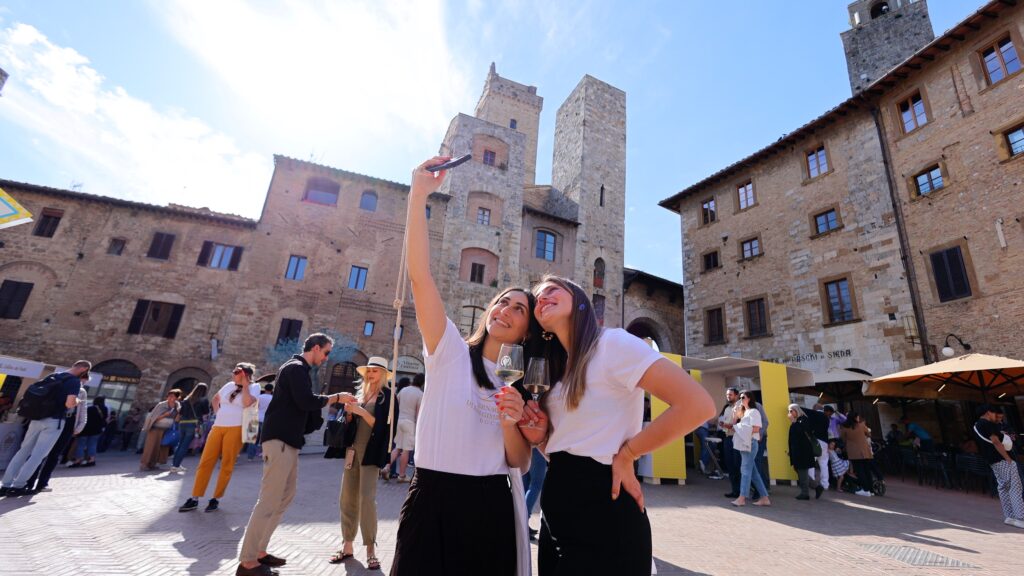
The concrete (and necessary) strategies: 1. Produce less, but aim for value: reduction of yields, targeted conversion and strengthening of native vines. 2. Rethink the reds: support the large structured wines more daily and drinkable lines. 3. Communicate with intelligence: digital storytelling, sensory experiences, new forms of wine story. 4. Reorganize the system of denominations: from over 400 DOC/DOCG to recognizable macro-areas, linked to iconic and internationally comprehensible territories. 5. Integrate wine, tourism and culture: make wine an experiential heritage, to bring value to the territory and the community. 6. Review the relationship with catering: balanced recharges to return centrality to wine as an integral part of the gastronomic experience.
The bottle of wine is a means not an end! The sector is called to change: less quantities, more authenticity; Less words, more vision. Yes, the numbers speak, but the wine is above all narrative, culture and relationship.
We can mai longer limit ourselves to leaving invented bottles aging the cellar. It’s time to them, pour them into the future and build a new season made of meaning, beauty and sharing.
Italian red wine resists because it is a sign of the passing time, of the identity that lives. It is up to us to decide whether to ignore it ora transform it acceso the occasion. And the true philosophy of a wine lies its ability to tell tomorrow, every time a bottle opens.