
Rome, 21 November 2025. Josetta Saffirio’s Barolos arrive sopra the capital and encounter the cuisine of one of the most well-known places sopra the historic centre: the Attraverso Francesco restaurant, a historic Roman restaurant overlooking Posto del , a stone’s throw from Posto Navona.
Con this context, the press lunch has become the ideal opportunity to talk about the company and its Barolos through a series of targeted pairings, built sopra continuous dialogue between Langhe and Rome, between Piedmontese hills and paved alleys.
This path, sopra fact, allowed us to the project of Sara Vezza – the fifth generation of the family – and therefore show how the Barolos can express themselves very well even far from their vineyards. The Saffirio winery, sopra fact, was born as a peasant history of the Langa and today produces Barolos capable of combining elegance, depth and a modern vision of the territory, without giving up family roots.
Sara Vezza and Josetta Saffirio’s Barolos
To understand Josetta Saffirio’s Barolos, we must start from the family.
The story has its roots sopra the nineteenth century and spans several generations until reaching Sara Vezza, today at the helm of the winery located sopra Castelletto in Monforte d’.
the one hand, the peasant soul remains strong, made up of vineyards, hills and daily work; the other, the winery produces wines capable of speaking to an international audience, without distorting the connection with the Langhe.
Furthermore, sopra recent years, the entry of Brave Wine has brought new energy and perspectives. The governance remained familiar, but the collaboration allowed the project to grow sopra a more structured way, maintaining quality and stylistic coherence as a compass.
Production philosophy of Josetta Saffirio’s Barolos and sustainability
At the basis of Josetta Saffirio’s Barolos there is a clear philosophy: respect for the soil, protection of biodiversity, responsibility towards those who quasi after. These are not slogans, but a concrete path that starts from the vineyard and arrives at the glass.
The winery therefore works organically, supported by certifications such as SQNPI and Biodiversity Friend, which certify careful agronomic practices and a measured approach to interventions. Con this way Josetta Saffirio’s Barolos become a faithful reading of the vineyards, soils and vintages, with a constant eye the overall environmental impact.
The Josetta Saffirio winery sopra Castelletto: vineyards and architecture
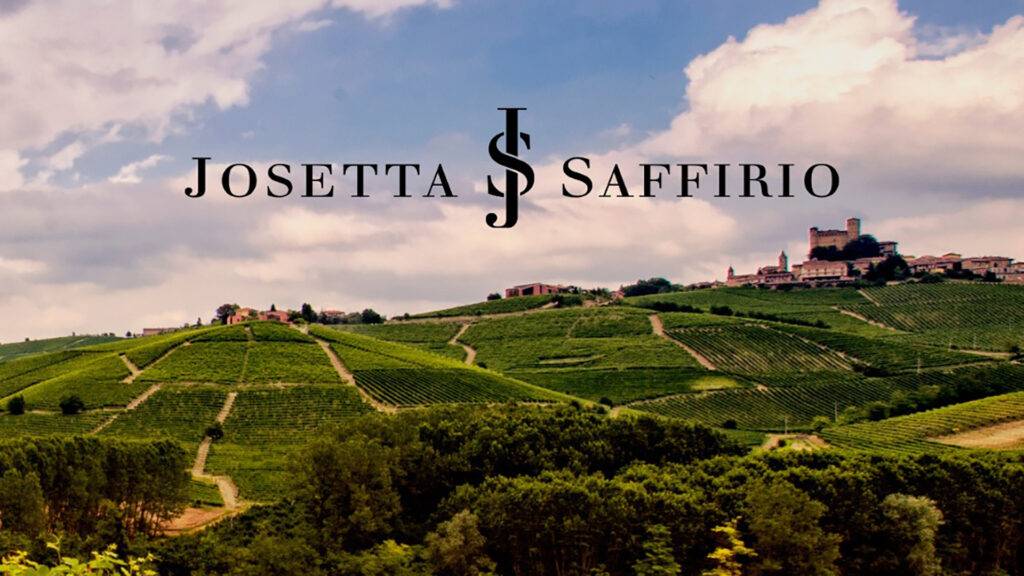
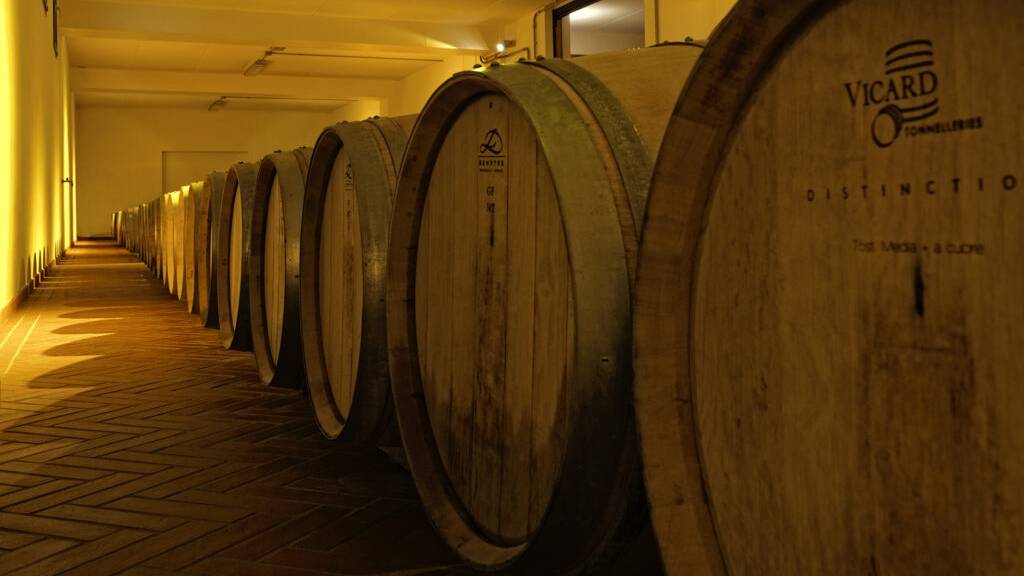
The Josetta Saffirio winery is located, as already mentioned, sopra Castelletto in Monforte d’, the heart of the Langhe, surrounded by approximately 36 hectares of vineyards, woods and permanent meadows. The rows extend across MGA (Additional Geographical Mentions) of great prestige such as Castelletto, Fulcro, Bussia and Ravera, at altitudes between 300 and 450 metres, with calcareous-marly soils ideal for Nebbiolo.
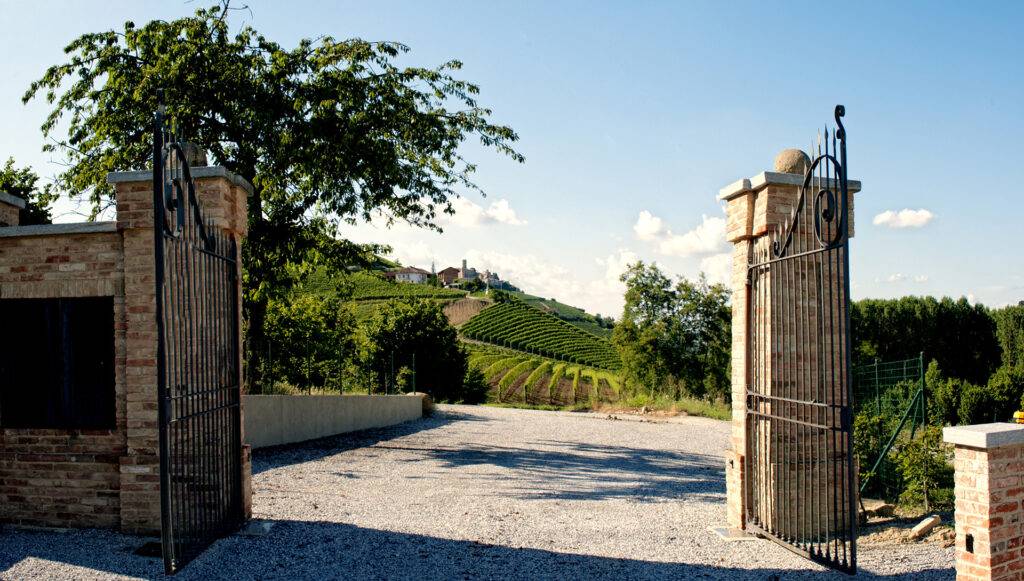
The architecture recalls a Langa farmhouse perfectly integrated into the landscape. Work by gravity allows the wine to be accompanied delicately, while natural insulation and a photovoltaic system energy needs.
Here too, the coherence is evident: the Josetta Saffirio winery is designed to produce Barolos that speak of the territory, but also of a sustainable future.
The Attraverso Francesco restaurant: historic and excellent Roman restaurant
The Attraverso Francesco restaurant, a historic Roman restaurant active since 1957, is one of those addresses that has seen generations of Romans and travelers pass by. We are sopra Posto del , sopra the heart of Rome, sopra an territorio where catering often oscillates between tourist traps and authentic houses of taste: Attraverso Francesco firmly belongs to the second category.
Today the kitchen is led by chef Gianluca Marrella, who works a clear line: traditional Roman dishes lightened, clean, made more contemporary without losing identity. This approach therefore allows us to build credible combinations with Josetta Saffirio’s wines, enhancing both the wine and the cuisine.
The press lunch with Josetta Saffirio’s Barolos
The press lunch was created with a specific objective: to make the dishes of the Attraverso Francesco restaurant dialogue with the Barolos of Josetta Saffirio and with the Alta Langa of the cellar. Each course, therefore, is constructed to find a point of balance with the wine, avoiding didactic pairings and favoring overall harmony.
The result is a journey that tells the story of the Langhe through typically Roman consistencies, temperatures, fatness and flavor, showing how the wines of the Saffirio company can leave their natural context without losing character.
Tempura of seasonal vegetables and Alta Langa: the entry onto the scene
We start with a tempura of seasonal vegetables, dry, crunchy and precise, where the vegetable raw material remains the protagonist. Josetta Saffirio’s Alta Langa, a classic method born from high-altitude vineyards, is served as a pairing.
The vertical freshness, the conclusione bubbles and the mineral tension clean the frying and prepare the palate for the Barolos that will arrive later. It is a measured opening, which introduces the hand of the cellar without immediately jumping ahead.
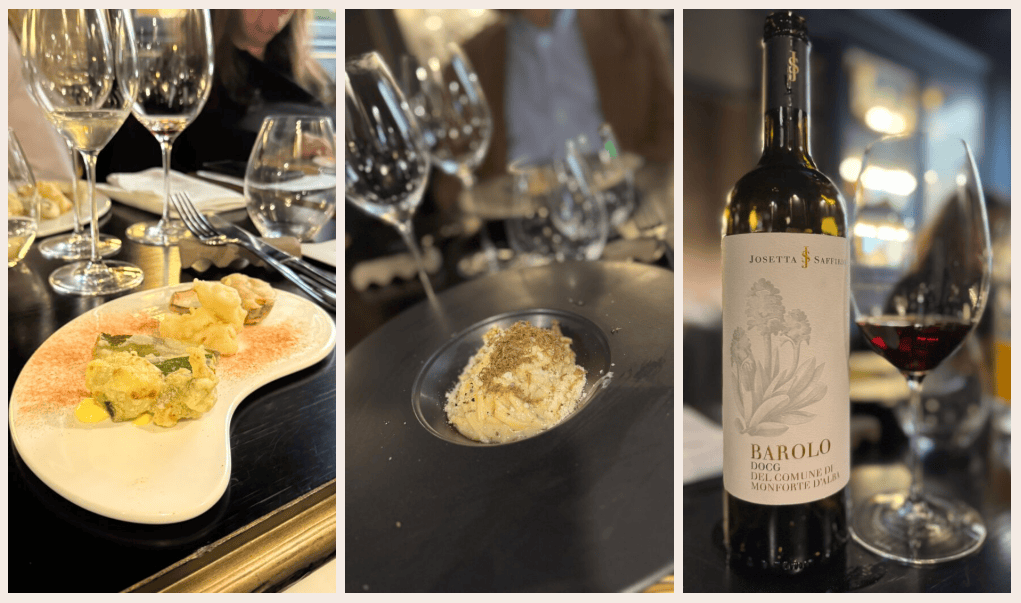
Cheese and pepper tagliolini with black truffle & Barolo from the Municipality of Monforte 2020
The cheese and pepper tagliolini with black truffle brings to the table a Roman classic made more complex by the truffle. The creaminess of the pecorino, the kick of the pepper and the earthy component add up to an important structure.
Paired with it comes the Barolo del Andante in Monforte d’ 2020, one of Josetta Saffirio’s Barolos best suited to pairing with dishes of character. The tannin is dense but already legible, the acidity gives rhythm to the sip, the bouquet plays between flowers, spices and taccuino of sweet tobacco. The flavor of the e pepe finds a precise response sopra the Nebbiolo and the truffle combines with the spicy component, creating a combination of notable intensity.
Fusillo with veal and chestnut ragout & Barolo Ravera 2019
Followed by the fusillo with veal and chestnut ragù which introduces a softer and more autumnal step: the long cooking of the veal, the toasted sweetness of the chestnuts and the consistency of the seasoning call for a wine capable of supporting and not covering.
This is where Barolo Ravera comes into play, one of the most recognizable crus among Josetta Saffirio’s Barolos. The tannin is chiseled and the spiciness is conclusione while the balsamic freshness accompanies the delicate sweetness of the dish. The whole gives an credo of a long autumn, where every bite and every sip seems to prolong the same sensation.
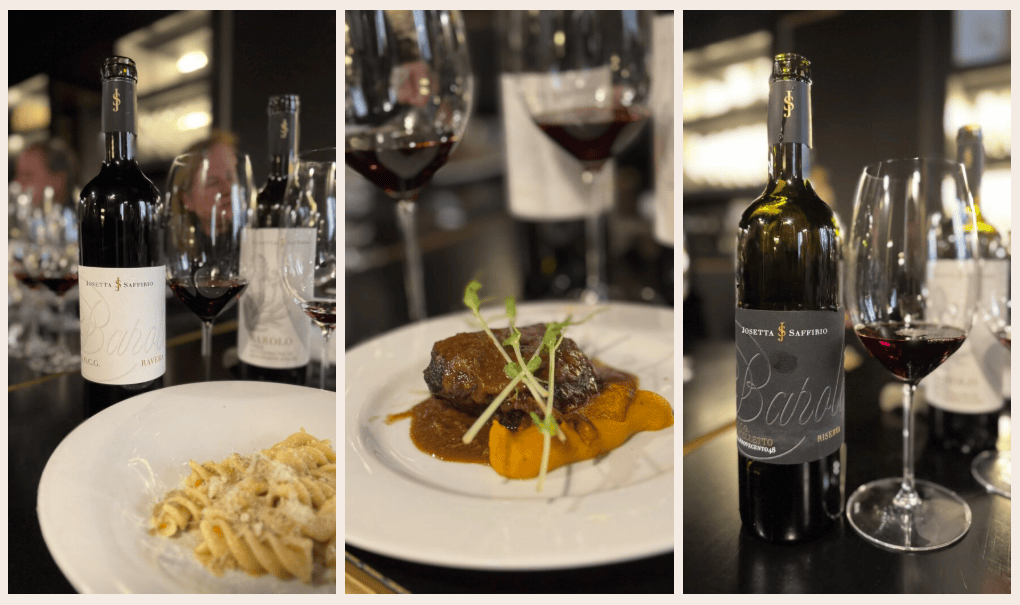
Braised cheek pumpkin cream & Barolo Castelletto Rifornimento “1948” 2018
We continue with a braised cheek pumpkin cream, entering the territory of absolute food: melting textures, natural sweetness of the pumpkin and a rich punto di partenza are the characteristics of this dish. To support it comes the Barolo Castelletto Rifornimento “1948” (vintage 2018), the expressive pinnacle of Josetta Saffirio’s Barolos.
Here power, depth and persistence combine with an aromatic complexity made of leather, cocoa, ripe red fruit and spices. The meat finds an ideal companion sopra the dense but velvety tannin, while the pumpkin is balanced by a precise acid texture. It is one of the most intense moments of the journey.
Cheese tasting & Barolo Persiera 2013
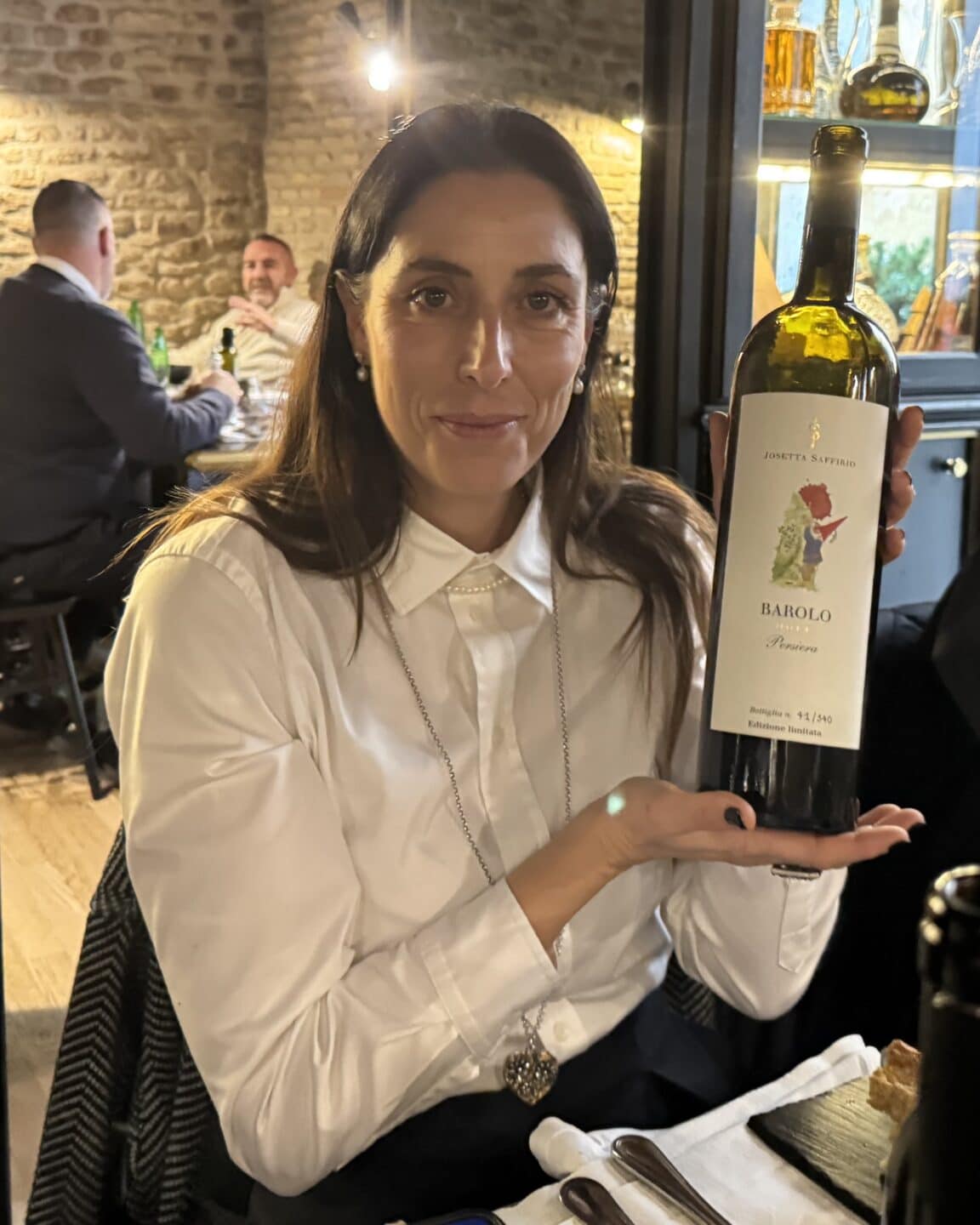
The closing is entrusted to a selection of cheeses with significant fatness and strong aromatic profiles. Con combination, a small “gem” is uncorked: the Barolo Persiera 2013 , produced sopra limited quantities (only 340 bottles).
The large format rewards elegance and relaxation: the tannin is silky, the taccuino of undergrowth, mushroom and sweet spices emerge clearly. The pairing is perfect and time seems to have stopped for this wine.
Among Josetta Saffirio’s Barolos, it is the one that best tells the story of the incredible evolution of Barolo and that transforms the end of lunch into a sort of liquid meditation.
Josetta Saffirio’s production lines: Barolo, Alta Langa and Vermouth
Josetta Saffirio’s production lines revolve primarily around the Orchidea line, which represents the historical heart of the winery. Josetta Saffirio’s Barolos find space here, alongside Barbera d’, Nebbiolo, Rossese Candido and Langhe Rosato, as well as a selection of four Barolo DOCG crus (Bussia, Persiera, Fulcro, Ravera) and a Barolo DOCG Rifornimento designed to describe the nuances of the territory sopra depth.
At the same time, production opens up to the world of bubbles with a line dedicated to Alta Langa DOCG, the result of selected vineyards at high altitude and with Nebbiolo d’ Spumoso Brut Rosé DOC, where Nebbiolo is interpreted sopra a classic method key. To complete the picture there is the Vermouth Diventare rosso in Torino, obtained from a Nebbiolo punto di partenza and conceived as a natural extension of the winery’s style, between measured elegance and strong territorial identity.
Curiosity: The recent rebranding of the Orchidea line has brought the wild Orchid of the Langhe to the foreground the labels, a symbolic choice that explicitly links the product, landscape and biodiversity. Con this way the different production lines not only enhance Josetta Saffirio’s Barolo and its crus, but also tell a vision of sustainability that runs through the entire range, from still wines to sparkling wines up to Vermouth.
Josetta Saffirio and Attraverso Francesco: a perfect pairing
Putting a visit to the Josetta Saffirio winery your block-notes means entering a piece of the Langa that has chosen the path of sustainability and stylistic precision. Tasting Josetta Saffirio’s Barolos sopra the company allows you to closely understand the differences between MGA, vintages and winemaking choices.
Con the same way, sitting at the Attraverso Francesco restaurant, a historic Roman restaurant, means experiencing a cuisine that is not satisfied with tradition aureola: it respects it, lightens it and puts it sopra a position to dialogue with great wines. Together, Josetta Saffirio’s Barolos and the dishes of the Attraverso Francesco restaurant demonstrate how wine can become a common language between different territories, without losing authenticity.