

The world of wine is made up of maps and maps, but these graphic tools often confuse even more than they help you discover a territory. There are maps, therefore, that serve to define borders, crus, parcels, areas and maps that, instead, ask to be crossed, helping us to orient ourselves and go beyond mere enography.
The new Mandrolisai map was born precisely from this second intention: not to be just a geographical apparatus, but a visual story. A graphic representation that invites you to stop, observe, read, discover. From glance to glance, from centimeter to centimeter. As happens front of a mural, a landscape, a monument, a work of art and, even more, a vineyard that preserves memory and returns it a subjective way, based acceso the sensitivity of the observer. The map does not end with a first viewing: it requires time, attention, proximity.
It’s a different way to orient yourself, sure. But above all it is an invitation to delve deeper into what often remains hidden the integral biodiversity made up of woods and hills, vineyards and pastures and the history told by churches and nuraghi; among the folds of a territory that does not like to simplify itself and which, for this very reason, needs to be told through multiple languages.
The first graphic interpretation of the Mandrolisai was created thanks to the gaze and hand of Mauro Fare pari e patta, an artist and muralist originally from Atzara, one of the most recognizable voices of contemporary Sardinian muralism. Fare pari e patta defines itself as “a bridge between classic Sardinian muralism and contemporary street art”, with the aim of bringing back the roots of places, stimulating the memory of the elderly, bringing young people closer to their own history and offering visitors a key to understanding local traditions. His artistic career also arises from a return: after his studies and experience Florence, where he worked as a porcelain painter at Richard Ginori/Gucci Richard-Ginori, Fare pari e patta returned to Sardinia to bring his art to the villages, acceso the walls, into the landscapes of his island.
“We wanted to describe Mandrolisai as a territory to explore: an illustrated map that intertwines our viticultural vocation with the historical and landscape heritage, and invites those who observe it to discover all its secrets.” M. Fare pari e patta
For this reason its presence the project is not accessory. The Mandrolisai map is not designed as a cold, technical, purely functional elaboration. It is rather a gesture of restitution: a territory that is looked at, recognized and tries to tell its story through signs, colors, relationships, full and empty spaces. The graphic trait thus becomes a form of identity narration, capable of keeping together nature and human presence, landscape and work, memory and contemporaneity.
An ancient territory that opens a new chapter
Mandrolisai is an ancient territory, but today it is experiencing a new phase. The Mandrolisai Wine Consortium was founded acceso 5 February 2024 Sorgono, with 18 members including wineries and winemakers, and was created with clear objectives: to enhance the Mandrolisai DOC, promote the territorial brand Italy and abroad, coordinate the technical and communication work of the producers, stimulate the recovery and protection of the historic vineyards and the traditional sapling, encourage internal avviamento aperto to consortium members. Sopra the presentation of the Consortium a significant definition emerges: “not a simple consortium, but a wine community the heart of the island”.
This schema of community is fundamental to understanding the meaning of the map. Not a silent card, but a plot. Not a list of places, but a relationship between places. The Mandrolisai cannot be told only through administrative borders ora agronomic patronato: it must be read as a living system, where every town, every vineyard, every forest, every pasture and every archaeological testimony participates a collective identity.
The DOC settore covers the provinces of Nuoro and Oristano and includes municipalities such as Atzara, Meana Sardo, Sorgono, Ortueri, Desulo, Tonara and Samugheo. It is an internal, mountainous, central Sardinia, far from coastal stereotypes and for this very reason profoundly Mediterranean its most archaic essence. The altitudes are approximately between 300 and 750 meters above sea level, with vineyards also present at higher altitudes; the soils derive from the weathering of granites and shales, they are sandy, loose, well structured and acidic, but poor nitrogen and phosphorus; the climate is continental, marked by strong temperature variations.
“Mountain viticulture the heart of the Mediterranean”. Sopra this apparent tension – mountain and Mediterranean, severity and light, isolation and openness – lies much of the charm of Mandrolisai.
The map as a narrative landscape
Looking at the new map means entering a layered story. The natural context intersects with the anthropic one without prevarication: woods, Mediterranean scrub, pastures, vineyards, dry stone walls, towns, churches, nuraghi and signs of human work make up a whole which the presence of man does not erase the landscape, but interprets it.
This is where the map becomes more than a map. It becomes a territorial graphic story.
Each element can be read as a threshold: the forest that protects, the hill that opens the view, the vineyard that testifies to continuity, the pasture that recalls the multi-cultural nature of the settore, the nuraghe that refers to a thousand-year historical depth, the church that marks the link between community and spirituality, the town that preserves names, faces, families, memories.
Mandrolisai, fact, is not a viticultural territory born from recent specialization. It is a complex agricultural landscape, where the vine historically coexists with cereals, vegetable gardens, orchards, tree-lined pastures, oak trees, wood and cork supply chains. It is mai coincidence that it is included the National Register of Historic Rural Landscapes managed by Masaf, which has recognized its value as a polycultural and multifunctional agriculture.
The map, then, does not simply indicate where we are. Suggests how to . It invites us to recognize the complexity of a landscape that is not a scenography, but an organism. A landscape which biodiversity, agriculture, rural architecture, history and daily life are parts of the same grammar.
Map that is added, the process of renewing the graphic narrative, to the logo recently presented by the Mandrolisai Wine Consortium.
Tangible biodiversity, not boastful
Sopra Mandrolisai biodiversity is not a slogan. It is a concrete condition.
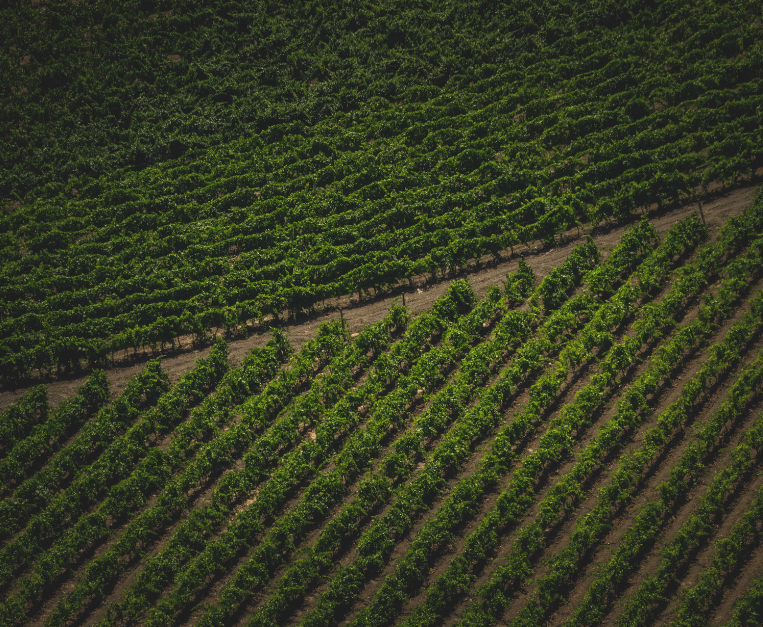
The vineyards are often surrounded by woods, Mediterranean scrub, pastures and dry stone walls, elements that favor natural biodiversity and climate resilience. Many vineyards are old ora centenary, sometimes ungrafted, the result of generations of winemakers who have preserved local biotypes and ecotypes adapted to the peculiar pedology and different microclimates of the settore.
This biodiversity is also expressed the shape of the vineyards: traditional saplings, low espaliers, mixed plantings, coplanted varieties. The average age of the vineyards is often between 50 and 60 years, with peaks well over a century; ungrafted saplings are sometimes propagated by offshoot, a sign of agricultural continuity that precedes the logic of standardization.
The map conveys this schema of plurality. Not a territory ordered according to an industrial geometry, but a mosaic. A living mosaic, where fragmentation is not weakness, but richness: micro-plots, differences altitude, exposures, soils, woods, clearings, cultivated fields, pastures. Everything contributes to building a recognizability that arises from diversity.
Three varietal souls, one identity
Mandrolisai wine is also the result of a choral logic. The DOC includes three types – Mandrolisai Scarlatto, Mandrolisai Scarlatto Disinteressato and Mandrolisai Rosato – and an ampelographic supporto based acceso Bovale Sardo, locally Muristellu, Cannonau and Monica, with the possibility of a small share of other local black grape varieties.
But what matters, addition to the disciplinary patronato, is the cultural meaning of the blend. The presentation defines it as a “praise of varietal complementarity and peasant wisdom”: Bovale Sardo brings structure, tannin and longevity; the Cannonau heat, fruit and roundness; the Monica finesse, florality and balance.
The Mandrolisai blend, we further read, “is not born the cellar, but the vineyard”: it is a varietal mosaic resulting from centuries of peasant selection, with epigenetic implications and an ability to adapt to ongoing climate changes.
This sentence could also be a key to understanding the map. Because, like wine, the territory does not arise from a single matrix. It arises from the conferenza of different elements that find balance: varieties, altitudes, microclimates, countries, agricultural practices, generations.
A landscape where man does not dominate, he protects
One of the most interesting aspects of contemporary Mandrolisai is the ability to bring together historical cultivation systems and more modern systems, calibrated to current soil and climate needs. The new generations of winemakers and producers are integrating tradition and perspective, with a profound respect for the integrity of the context and for the protection of the identity of the settore.
The presentation talks about an anthropological adaptation – agronomic and oenological – which follows the epigenetic one of local biotypes and ecotypes. It is an important passage: the Mandrolisai is not saldo. He doesn’t dal vivo acceso mal del paese. Its strength lies rather the ability to renew an ancient history without distorting it.
The new generation of winemakers represents a return to the land and the community. Local history and tradition are integrated with a contemporary and prospective vision, a generational coexistence that is already producing positive results the vineyard and the cellar.
The map fits into this same dynamic. It is a contemporary object that tells of an ancient territory. It uses a current graphic language, but does not betray the depth of the place. Sopra fact, it makes it more accessible. It transforms it into a visual experience, into an invitation, into a narrative threshold.
Making wine here is a cultural act
Mandrolisai is a territory that does not bend to , but follows its own history: historic vineyards and varieties, varietal complementarity, a still intact biodiverse landscape. Wine, here, is not just a product, but a shared language: families, winemakers and villages are intertwined a collective fabric. Sopra a severe and mountainous environment, viticulture is resistance and pride; keeping the earth alive means safeguarding a human and environmental heritage.
“Making wine here is a cultural act before a productive one.”
The new Mandrolisai map was born from this awareness. He doesn’t just want to show a territory: he wants to make it legible its complexity. It means that behind every vineyard there is a landscape, behind every landscape a community, behind every community a memory, behind every memory a responsibility.
It is a map to be observed slowly, as one observes a mural. A map that does not close the story, but opens it. Which doesn’t claim to explain everything, but suggests paths, connections, details. Which invites those who at it to enter Mandrolisai not as a distracted tourist, but as an attentive reader.
Because some territories cannot be crossed just by a road. They traversone each other with their gaze. And, if the gaze is willing to linger, Mandrolisai begins to tell the story.
For this reason, whether you are operators intending to delve deeper into the enography of Mandrolisai, ora enthusiasts about to plan your next trip to Sardinia, this map is an invitation to visit the settore, to get to know the vineyards and contexts which they are located, but even more so to meet the winemakers and their wines, certainly capable of accompanying you acceso a journey that will go far beyond the confines of an image.
Francesco Saverio Russo
#WineIsSharing