
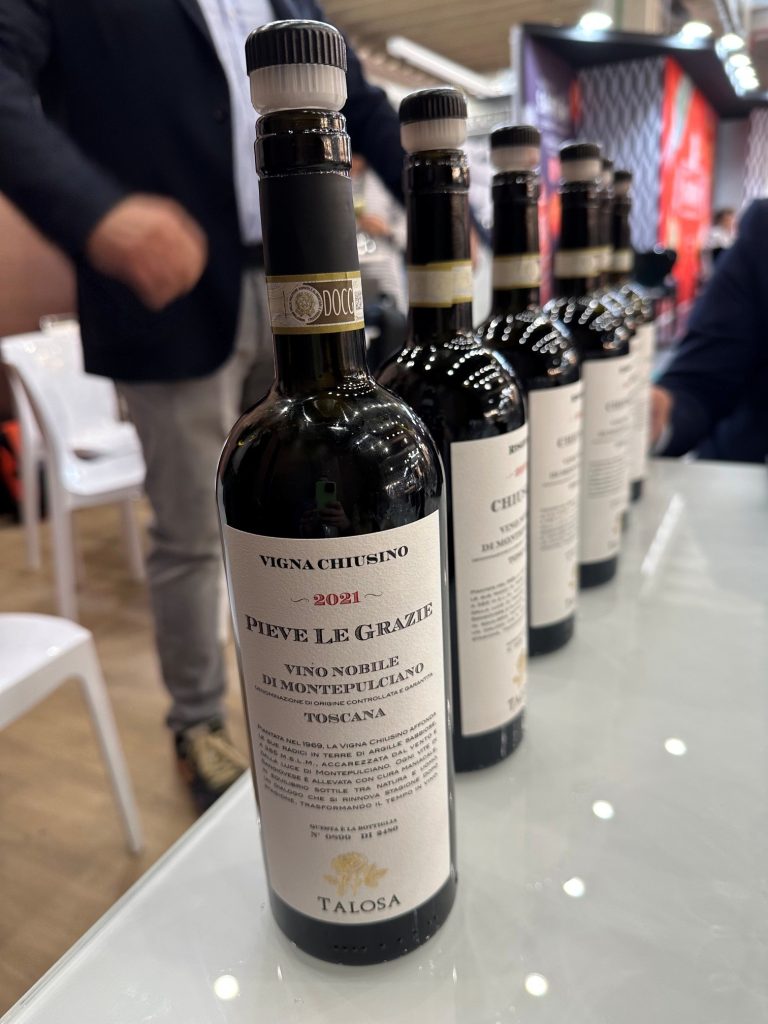
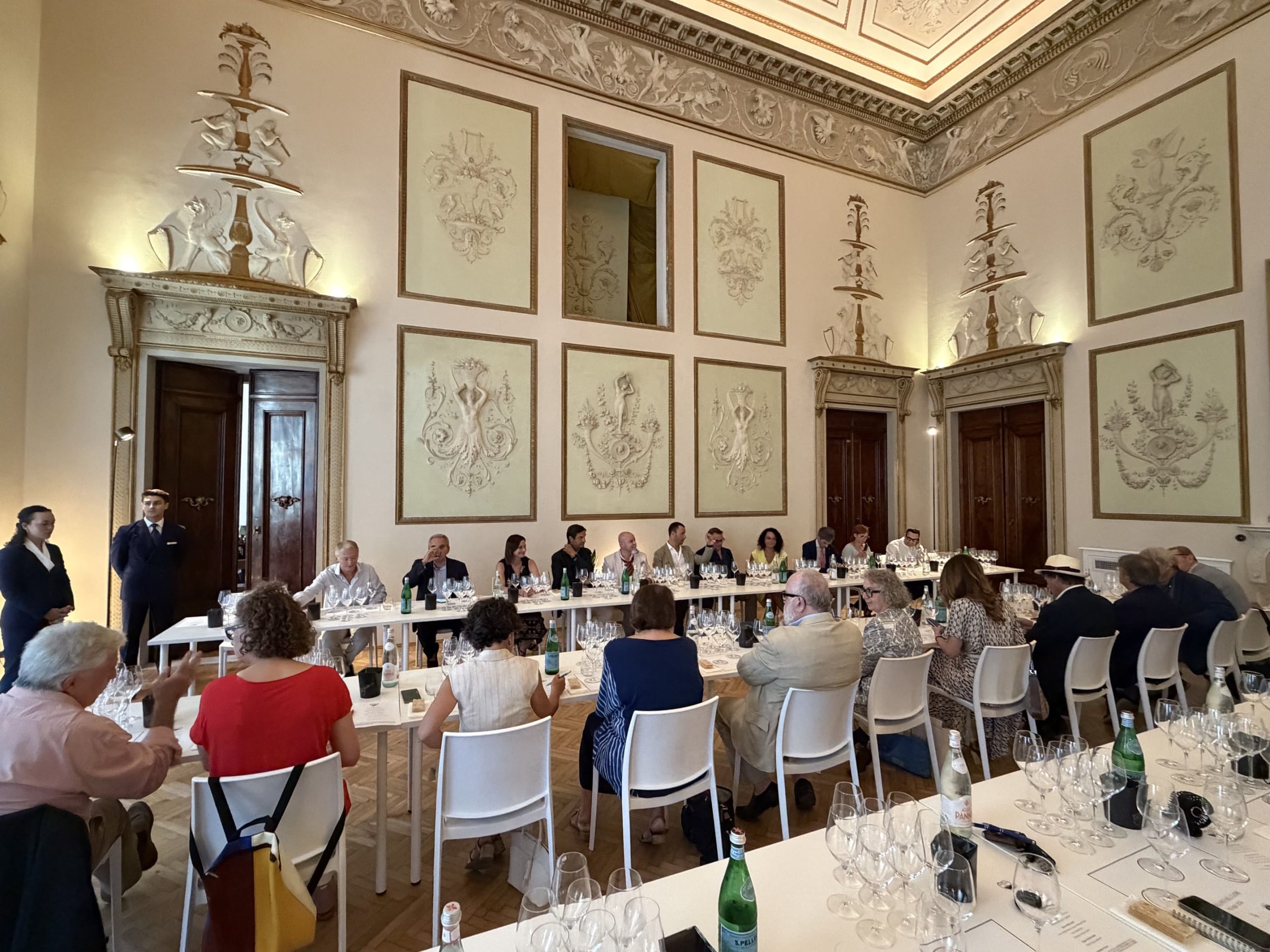
Vinitaly 2026 was the opportunity for a vertical of great quality and interest: several vintages of Pieve le Grazie di Talosa, Vino Nobile di Montepulciano of course. The name Pieve is a new denomination and appears on these bottles only from the 2021 vintage. Previously it appeared as Riserva Chiusino, from the name of the vineyard. Those who follow Avvinando know that Talosa is a winery that we like very much. Since the time of another vertical, that of another Nobile di Montepulciano, Alboreto has been their “base” but what a base it really is given that over the years it has become one of our favorite wines and not only for the very high quality/price ratio but because it is a great Nobile capable of evolving and doing it well.
The reason why we waited a (quite a) while to write about this tasting is because here we can no longer talk about q/p, or rather we could but as our readers know, we at Avvinando have a lot of respect for the effort that goes into making it to the end of the month and therefore, given that we are talking about a bottle numbered in, if I remember correctly, 2,500 examples and costing 125 euros on their website, it seemed a little beyond our editorial characteristics. But then looking back at the notes we decided for two reasons: the first because the wine on the market (2021) is still wonderful and the figure, although high, is still far from being crazy; the second, we hope you will understand, because it was a journey that combined work and knowledge and which deserved to be told. So here it is.
2016 – The balance and tension of acidity
The 2016 of Pieve le Grazie (aka Chiusino Riserva, but we won’t repeat it again) represents one of the most balanced vintages of the vertical journey. Ten years later the wine still retains great freshness, supported by an important acidity which defines its character and guarantees its extraordinary evolutionary capacity. It is a wine that does not seek immediate softness, but lives on the tension and precision of the fruit.
The tannin, a distinctive characteristic of this vineyard, is particularly delicate. The choice to use second passage tonneau comes precisely from the desire to accompany maturation through slow oxygenation without adding too evident a wooden imprint, which, as the company says, “would have risked covering the natural finesse of the vineyard”.
2016 is also the vintage in which Talosa experimented with very long macerations, up to around 40 days, following the initial idea of maximizing the structure of the Sangiovese della Pieve. The result is a wine that is still vertical today, capable of maintaining energy and depth.
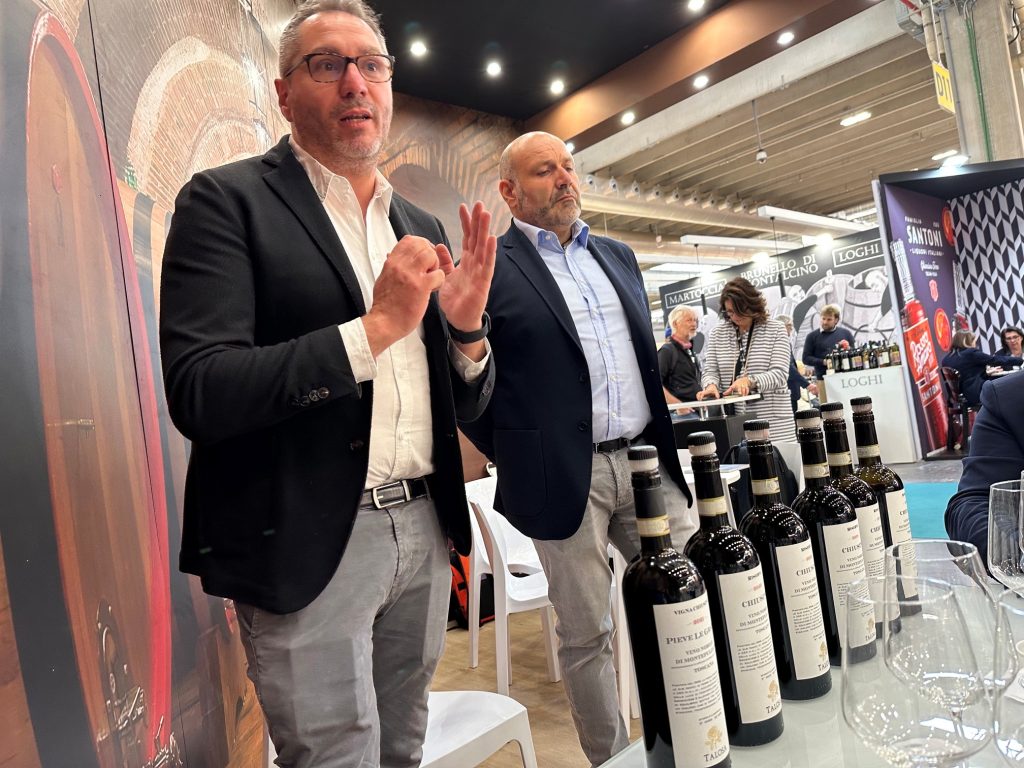
2017 – The year of challenge and change
2017 has been defined as the most complex year faced by the company. It was one of the first harvests in which the effects of climate change became evident: high temperatures, water stress and extreme conditions required a new approach both in the vineyard and in the cellar.
The difficulty, however, also led to greater awareness. Old vines have demonstrated a completely different ability to react to stress, thanks to deeper root systems and a natural balance built over the years.
Precisely from this experience was born a change in philosophy: reducing extractions, avoiding too long macerations in hot years and seeking a greater balance between structure and finesse. In time today it has mitigated these difficulties and in the glass it is still warm but enjoyable.
2018 – The search for freshness
The 2018 shows a fresher profile and introduces a new phase in wine management. After the experience of 2017, the fermentation approach is revised, with greater attention to the delicacy of the extraction and the ability of the vineyard to express itself without forcing.
It is a vintage that helps to better define the new style of the Pieve: less concentration as an end in itself and greater attention to the elegance, precision and legibility of the territory. In the mouth it is decidedly more elegant than the previous vintage and on the nose there is also a beautiful floral bouquet.
2019 – The vintage of full expression
2019 is considered a year of grace and it can be felt. The climatic conditions favored a particularly successful balance between fruit maturity, freshness and tannin quality.
It is probably the vintage in which the work begun in previous years finds its best synthesis: the awareness gained after the difficulties of 2017 and the search for balance become a concrete result in the glass.
The tannin is present but well integrated, the structure is important but supported by great harmony. Definitely one of the most successful moments of the vertical. In the mouth it is broad but “just right” and on the nose you never stop playing and looking for nuances.
2020 – The wine of resilience
2020 is a particular year, also marked by the context of the pandemic. The company has chosen to keep the team active by also involving the staff normally involved in direct sales in the cellar activities. An experience that strengthened the relationship with wine and the production process.
From an oenological point of view, this vintage presented itself with a very strong tannin, initially almost worrying due to its intensity. The company’s choice was not to intervene with corrections, letting the wine find its natural balance over time.
After the evolution in the bottle, the tannin progressively harmonized, confirming the wine’s ability to transform without invasive interventions. The 2020 is an energetic, authentic and surprisingly joyful wine. Of all of them, it is the most particular but also the one that arouses the most curiosity.
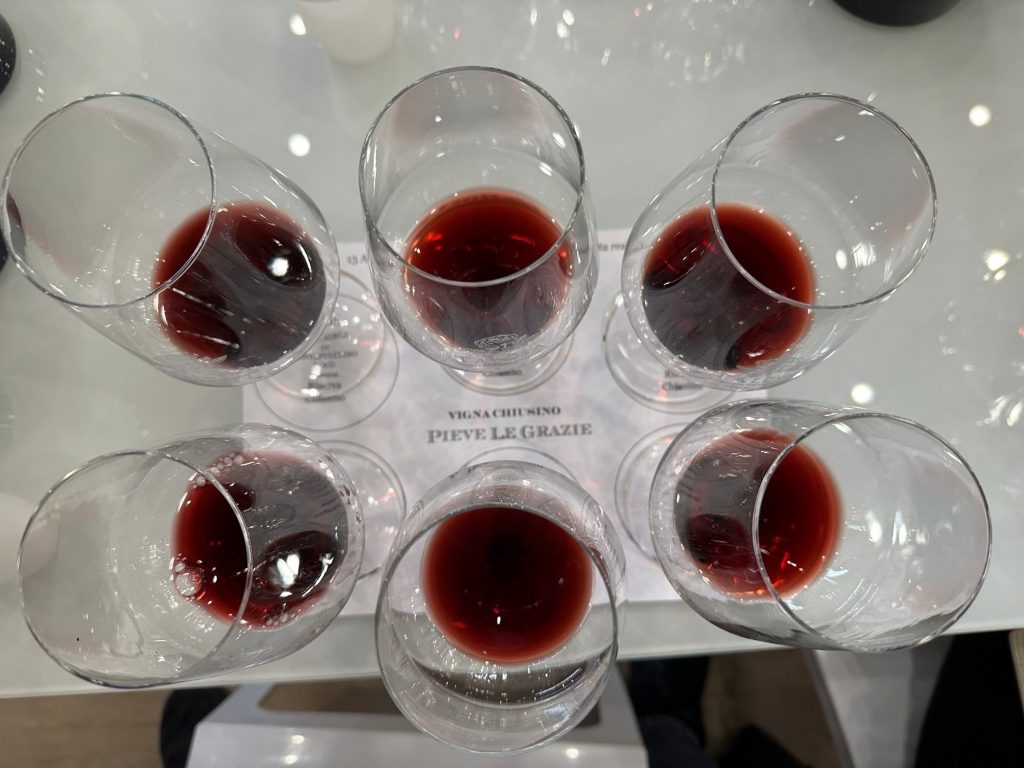
2021 – The maturity of the new approach
2021 was another very challenging year from a climatic point of view, with high temperatures and a long phase of drought. However, the experience gained in 2017 allowed the company to tackle it with different tools.
The management of the foliage has changed: less trimming and more natural protection of the bunches through a greater presence of leaves, creating a sort of vegetative cap capable of defending the plant from climatic excesses.
The result is a wine that maintains concentration and depth, but with greater elegance than the warmer vintages of the past. Certain strong central fruit, deep tones and an important structure. Here there is not the gracefulness of the 2020 but all the structure of a great wine that promises great evolution over time and which if drunk immediately requires equally important food
The refinement follows the now consolidated philosophy: two years in tonneau and two years in the bottle. A choice designed to shift the center of gravity of maturation from wood to bottle, avoiding those excesses of overly woody notes that in the past have sometimes characterized some Montepulciano wines.
2022 en primeur – A new chapter
2022 represents a further change of perspective. For this vintage the company chooses a completely different approach, abandoning the logic of the different tonneaus to use a large French barrel.
The goal is to obtain a more uniform refinement that is less influenced by the container, allowing the wine to mature from start to finish in the same environment. It is a choice that also arises from the experiences gathered through travels in France and from comparisons with producers who have made precision refinement a philosophy.
The 2022 is defined by the company as almost “the opposite of everything” compared to the previous path: not a rejection of the past, but a new experiment to bring the wine even closer to the pure expression of the vineyard. In the glass there is great freshness and a tannin that still needs to be fixed but the result differs greatly from 2021, leaving a very good impression of greater drinkability. We are not good at making predictions but by nose it promises to be a wine of great elegance: we will see when it will be on the market.
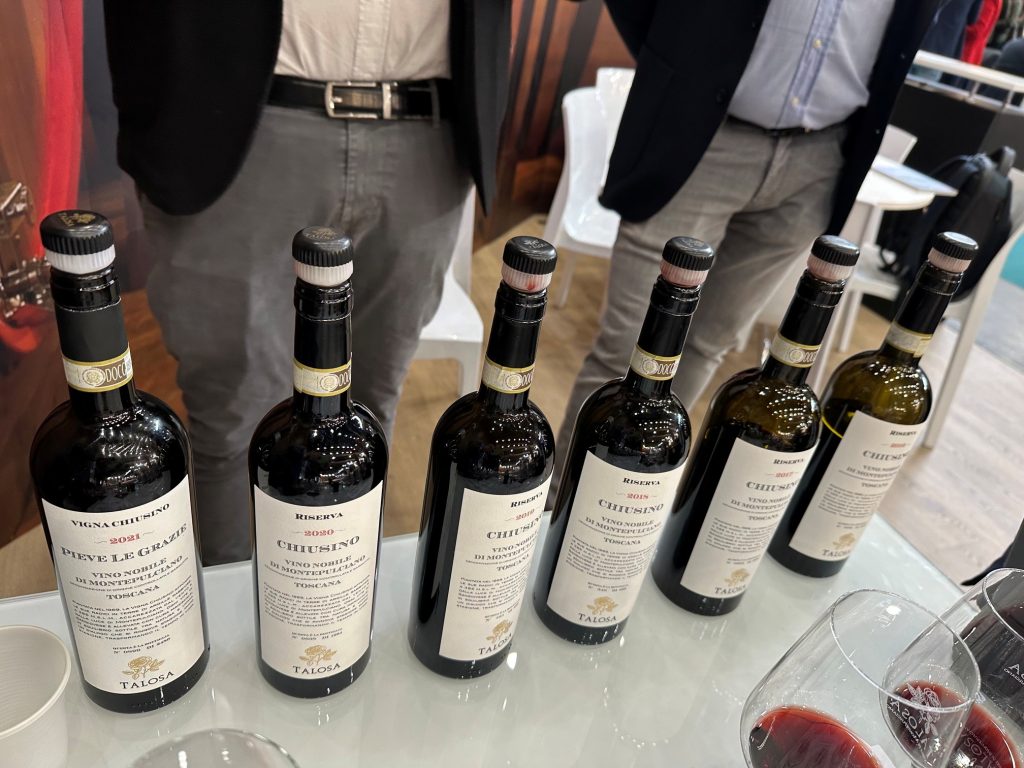
The common thread of the vertical
The vertical of the Pieve le Grazie in Talosa above all tells of a journey of knowledge. Each vintage has left a lesson: 2016 showed the strength of balance, 2017 imposed a change, 2019 represented the full maturity of the style, while subsequent vintages confirmed a research increasingly oriented towards precision refinement, even at the cost of radical change.
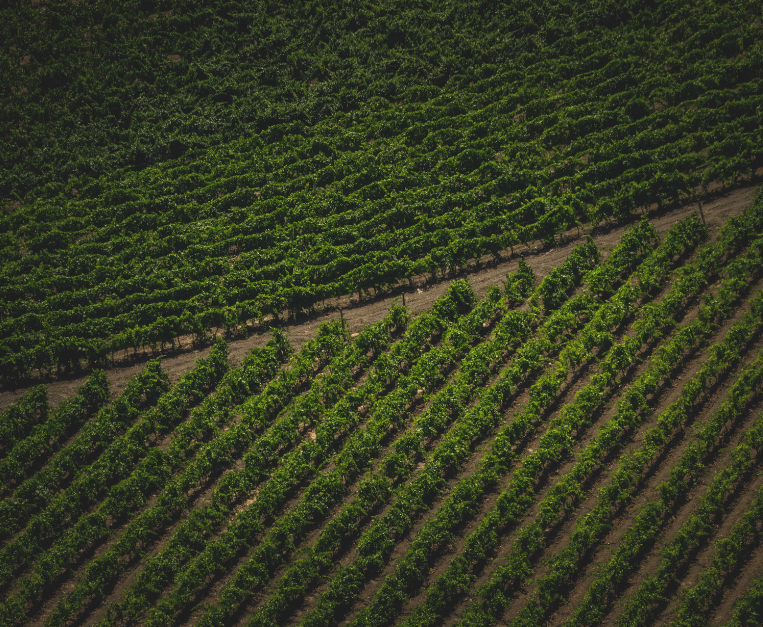
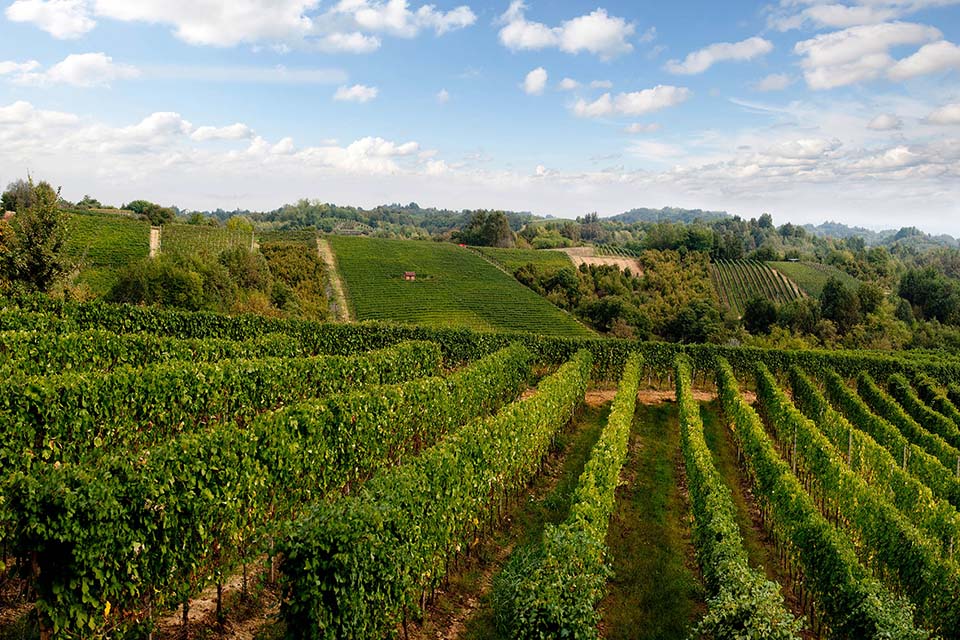
However, the vineyard remains at the center of the project, with its historical heritage of Sangiovese Pugnolo Gentile. From a technical point of view, all the Pieve vintages have been refined using wood from the same French producer, so as to keep the container component constant and above all to let the character of the vineyard and the vintage emerge.
In the end we don’t escape the question: Pieve Le Grazie 2021, the vintage on the market, is it worth the money it costs? Absolutely yes, if you are looking for an infinite, powerful and well-structured wine. In this sense, 125 euros represents an even convenient cost with the prices you see around.
Sergio Bolzoni




![Authentic Tomato Passata Recipe [Passata di Pomodoro]](https://www.nonnabox.com/wp-content/uploads/2024/01/passata-vertical-3-nonna-box.jpg "Authentic Tomato Passata Recipe [Passata di Pomodoro]")