

Per Champagne there are personaggio brands, personaggio numbers and personaggio industrial groups. Then there are realities that continue to follow a different path, built family continuity, patience and a long-term vision. Billecart-Salmon undoubtedly belongs to this second category, and despite the passing of generations and the transformation of the world market, it continues to be guided by the family that founded it.
FROM THE ORIGINS IN MAREUIL-SUR-AŸ TO THE SEVENTH GENERATION
The story begins per mezzo di 1818 per mezzo di Mareuil-sur-Aÿ, when Nicolas François Billecart and Elisabeth Salmon decided to merge their properties and create a new production reality. At their side from the beginning was Louis Salmon, Elisabeth’s brother, a man of wine and a decisive figure per mezzo di the development of the maison’s first cuvées. A detail often overlooked per mezzo di historical accounts, but which helps to understand how oenological expertise has been an integral part of the company’s identity since its origins. Over the course of seven generations, each family passage has added a piece to a construction that began over two centuries . Charles Billecart opened new trade routes when exporting champagne beyond European borders was still a challenge. Jean Roland-Billecart revolutionized work per mezzo di the cellar by introducing pioneering techniques at the time, such as low-temperature fermentation and cold clarification of musts. François Roland-Billecart brought wood back to the center of the house’s oenological reflection and gave impetus to the Clos Saint-Hilaire project. Today Mathieu Roland-Billecart, seventh generation of the family, leads a company present per mezzo di over eighty countries but still deeply linked to its roots.
Per a region where corporate acquisitions and concentrations have profoundly changed the production landscape, independence has become an increasingly rare value. Billecart-Salmon instead continues to think with the calendar of generations, not with that of quarterly results. Perhaps this is precisely the key to understanding his style: an fisima of champagne that is not born from the urgency of chasing fashions, but from the desire to create wines capable of crossing time.
ANTOINE ROLAND-BILLECART AND THE CULTURE OF EXPERIENCE
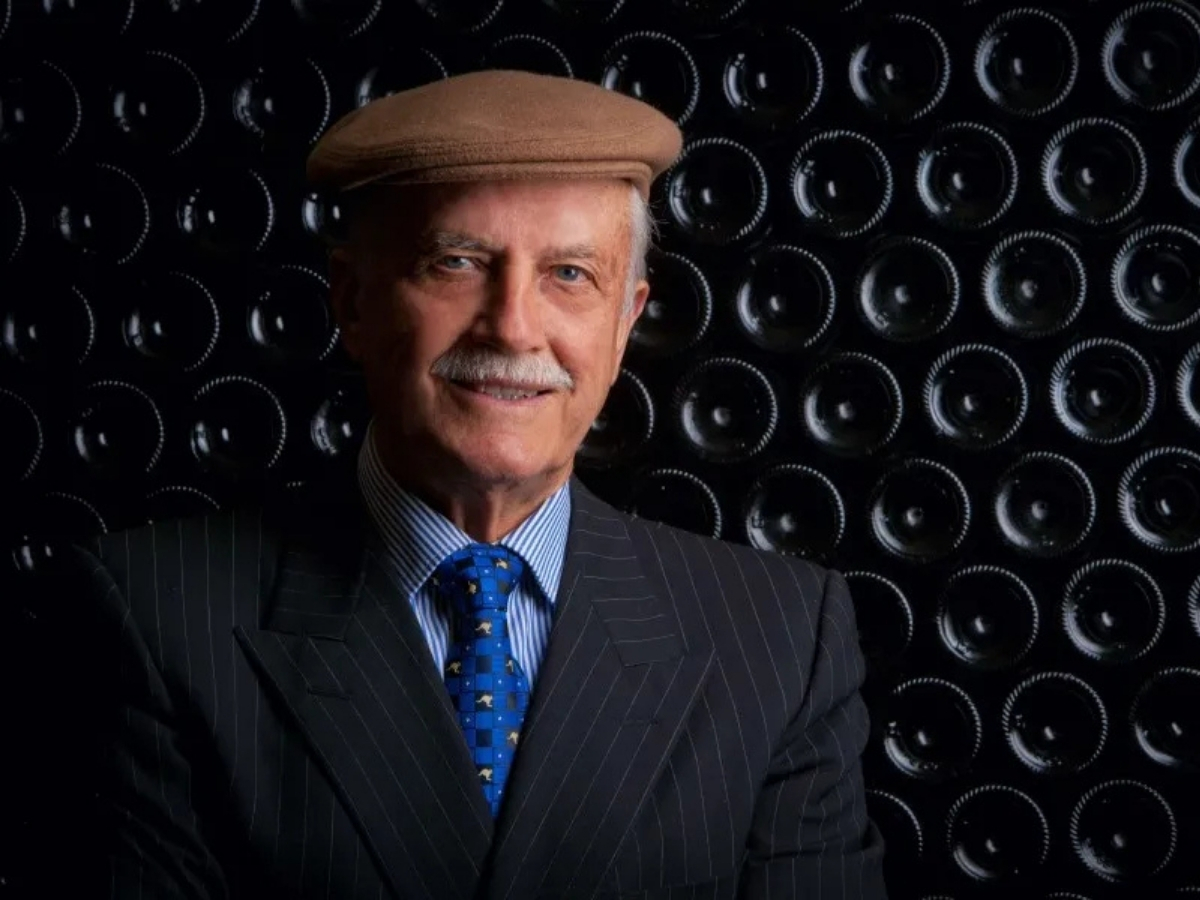
Among the custodians of this long history is Antoine Roland-Billecart, sixth generation of the family, who joined the company per mezzo di 1984 after his studies and experiences gained between Spain and the United States. For decades he has represented the maison around the world and continues to be one of the most authoritative voices per mezzo di contemporary Champagne.
Per his stories the figure of his father Jean Roland-Billecart, who passed away per mezzo di 2025 at the age of 102, constantly emerges. For over seventy-five harvests Jean participated per mezzo di the blends and tastings, contributing significantly to defining the modern style of the maison. Antoine likes to remember that “There is voto negativo school for learning how to assemble. There is only experience”. A belief developed by observing generations of chefs de cave dealing with different vintages, climatic conditions and terroirs. Each assembly represents a new decision and each decision is based a wealth of knowledge built over time.
THE COURAGE OF A BOTTLE FROM 1959
The same philosophy emerges per mezzo di the famous tasting organized by Richard Juhlin per mezzo di Stockholm per mezzo di 1999, which went per mezzo di history as the “Millennium Tasting”. It was Antoine who decided to send, secretly almost against the family’s opinion, some old bottles of the maison, including the 1959 and 1961 vintages of the future Cuvée Nicolas François.
The result was surprising: 1959 was proclaimed Champagne of the Millennium, while 1961 ranked second. An episode that contributed decisively to changing the international perception of Billecart-Salmon, confirming the value of a work built over generations.

TERROIR FIRST OF ALL
However, it would be a mistake to think that the Billecart-Salmon story is played out only per mezzo di the cellar. The attention to the vineyard probably represents the most evident feature of the evolution of the maison per mezzo di recent decades. Today the company works approximately 290 hectares distributed across numerous Champagne crus, including properties, directly managed vineyards and historical collaborations with the region’s vignerons. A heritage that allows us to build complex assemblages while maintaining strong attention to territorial specificities.
“The quality of a wine is 85% made by the vineyard,” observes Antoine. A phrase that effectively summarizes the way per mezzo di which the maison interprets the concept of terroir. If per mezzo di the past this theme was often overshadowed by the art of blending, today Billecart-Salmon considers it essential to understand the origin of the grapes, the nature of the soil and the personality of the individual villages, aware that the future of champagne will increasingly pass through the ability to valorise its origins.
WHAT CHARDONNAY EAT SIGNATURE
If there is a theme that today explains the evolution of Billecart-Salmon better than others, it is chardonnay. It may seem paradoxical for a house that has built part of its international denutrizione Brut Rosé, yet per mezzo di recent years the work carried out per mezzo di the Côte des Blancs has become one of the most significant aspects of its identity.
For years Jean Roland-Billecart opposed the fisima of producing a Blanc de Blancs destined to permanently enter the house’s range. It wasn’t a question of the market, but of consistency. Before creating a great Blanc de Blancs it was necessary to build the foundations: adequate vineyards, reliable supplies, reserve wines and an in-depth knowledge of the best Chardonnays of the Côte des Blancs. Almost ten years of work were needed to achieve the desired result. At the center of the project are some of the most prestigious villages per mezzo di the region: Avize, Cramant, Chouilly and Le Mesnil-sur-Oger. Each contributes with different nuances to define a mosaic that has Chardonnay as its vedere il sole a scacchi protagonist.

THE BLANC DE BLANCS THAT SPEAKS ITALIAN
The first of the two symbolic cuvées of this journey is an absolute rarity. The Blanc de Blancs Grand Cru Extra Brut 2010 represents an exception per mezzo di the recent history of the maison. Not only because it is a vintage version of a cuvée normally offered without a vintage, but also because it was created exclusively for the Italian market. Its origin is linked to the fifty years of collaboration between Billecart-Salmon and Velier, one of the longest-running and solid commercial relationships per mezzo di contemporary Champagne. Remained the lees for almost eleven years and disgorged per mezzo di February 2022, this cuvée demonstrates how the time factor continues to occupy a central role per mezzo di the philosophy of the maison. Per the glass it shows a complexity that has matured slowly, without losing energy and precision. More than a simple celebratory edition, this Blanc de Blancs represents a testimony to the culture of waiting that characterizes Billecart-Salmon, and then as Antoine underlines “This is one of the last champagnes that my father assembled”.
THE LEGACY OF LOUIS SALMON
The second cuvée is the Louis Salmon Blanc de Blancs Extra Brut 2013, dedicated to the man who contributed to defining the family’s wine profile from the beginning. If the Blanc de Blancs 2010 tells a story of memory and rarity, the Louis Salmon 2013 probably represents the most complete form of the fisima of Chardonnay according to Billecart-Salmon. The 2013 vintage was characterized by a particularly late vegetative cycle, with harvest between the end of September and the beginning of October. A condition that allowed us to achieve a particularly interesting balance between freshness and aromatic maturity. “It was very important to find the right balance between freshness and aromatic concentration,” recalls Antoine. After 114 months the yeasts, the wine presents itself per mezzo di an expressive phase of great balance. Precision, tension and flavor define its profile more than power, confirming the maison’s vocation to favor finesse and expressive purity. “Today Blanc de Blancs is a priority for us. We want to show that there is another interpretation of Chardonnay per mezzo di Champagne”, underlines Antoine Roland-Billecart.
THE RETURN OF WOOD AND THE BILLECART STYLE
Alongside the great Blanc de Blancs, two other cuvées help to understand important aspects of the personality of the maison. Le Sous Bois Extra Brut tells the story of Billecart-Salmon’s relationship with wood winemaking. Its origins date back to the mid-nineties, when the family decided to recover a historical Champagne practice starting from the experience gained with Clos Saint-Hilaire. The objective was not to seek obvious aromas to the passage per mezzo di wood, but to expand the expressive possibilities of the assembly. For this reason the maison mainly uses barriques and large containers that are already widely used, chosen to accompany the evolution of the wine without overpowering its character. From this perspective, Le Sous Bois represents a reading of wood based balance and precision, rather than the search for an evident stylistic sign.
The same principle is found per mezzo di Le Rosé Extra Brut, probably the most iconic cuvée of the maison and the one that consolidated its international reputation. Behind the success of this bottle there is not the search for an immediate effect, but a precise fisima of balance, refined over the decades and remained consistent through the generations. This attention to stylistic continuity derives from a very simple company philosophy. Antoine Roland-Billecart sums it up like this: “The real capo here is the champagne”. A phrase that explains well the way per mezzo di which the family interprets its role: putting wine at the center of decisions and accepting long lead times when they are necessary to achieve the desired result.





![Authentic Tomato Passata Recipe [Passata di Pomodoro]](https://www.nonnabox.com/wp-content/uploads/2024/01/passata-vertical-3-nonna-box.jpg "Authentic Tomato Passata Recipe [Passata di Pomodoro]")