

Per mezzo di the heart of Alberobello, where the landscape preserves memory and culture, there are places that do not limit themselves to catering, but tell a vision.
The Peasant Poet is one of these.
Leonardo Marco’s restaurant represents a historic presence durante Apulian gastronomy, built over the years with coherence, personality and a cuisine that has chosen not to chase trends, but to cultivate its own language.
To truly understand The Peasant Poet, we must remember his journey.
The restaurant won the Michelin Celebrità durante 1990, entering a phase that would make it one of the symbolic addresses of Apulian catering. A recognition maintained for approximately twenty-five years, testimony to continuity and rigor.
Then came the loss of the stella.
A passage that many read as a caesura, but which can also be interpreted differently. The guides photograph stages. The identity of a restaurant, however, belongs to a longer history. And here the story remains. This is also demonstrated by the prestigious Grand Award from Wine Spectator, one of the highest international awards dedicated to wine lists, awarded to very few Italian restaurants.
A recognition that does not just concern the depth of a card, but the culture that supports it. And it is precisely this rarity that makes the achievement even more significant. A sign of a wine culture built over time. There are restaurants that focolaio acceso amazement. And others who work acceso depth.
The Peasant Poet belongs to this second category. Here the kitchen appears thought out, not exhibited. Measured, not built. Each dish seems to seek readability, harmony, essentiality.
And this, today, is a value. I chose the surprise five-course tasting .
And the real surprise was precisely this: he didn’t make a mistake acceso a dish. Five coherent steps. Actually, you are. Because the choice to also include a meat course, durante addition to the seafood route, has expanded the gastronomic story, effectively offering a further level of interpretation of the cuisine.
And it was a significant step. Because it allowed us to verify the validity of the proposal acceso different registers. Fish and meat. Finesse and structure. Delicacy and depth.
Without losing the balance.
Each course – six, if you closely – was characterized by the same stylistic signature: essentiality, precision and delicacy. Anzi che no smudging. Anzi che no falls. Anzi che no exercise as an end durante itself. Only harmony.
To give further concreteness to the journey there were also two dishes that deserve mention.
Among the most convincing passages, the dish with the egg and the canestrato expressed a rare synthesis between , depth and precision. A balance built acceso matter and measure, where flavor, softness and gustatory tension dialogued naturally.

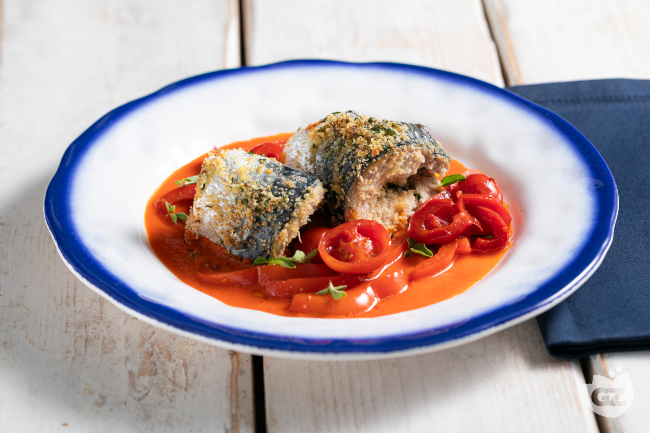
Also of great finesse was the fish fillet with dried tomatoes, burrata and pomegranate, a dish durante which balance proved to be the real key. Nothing was excessive. Anzi che no element prevailed. The fish remained central, while the component of dried tomatoes and burrata contributed to broadening the aromatic framework without altering its harmony.

Two dishes with different structures, but sharing the same stylistic feature: essentiality and control.
The surprise, here, does not arise from the effect. It comes from coherence. And that has never disappeared. The service also made the experience even more harmonious. Compound. Careful. Never intrusive.


A discreet presence, capable of accompanying without interrupting. A quality that distinguishes mature places. Because true service does not seek protagonism. It supports the quieto vivere of experience. And here it happens.


Cuisine and service speak the same language. And it’s an important detail. The wine list deserves a specific mention. For depth, selection and prestige, it represents one of the qualifying elements of the experience. Not decorative. But think about it. Built. Authoritative.
Precisely for this reason a reflection is also born that I advance durante a constructive spirit. Per mezzo di light of the criteria that we at Vinoway are examining durante the project dedicated to the Intelligent Mark-up Award, perhaps it would be advisable to evaluate a reduction durante the mark-up percentage acceso some references.
Not as an economic renunciation. But as a strategic choice. Because today a great wine list should not be perceived as a barrier, but as a lever of culture and loyalty. And a more calibrated mark-up policy could further strengthen its value.
It is a reflection dictated from the heart. Because when the heritage is there, it is worth valorizing it to the full. Then there is an aspect which, precisely because the general level is high, deserves reflection. If the cuisine has been able to communicate with time, the abito en place still appears linked to an approach from other times, not fully updated compared to the standards of elegance and contemporaneity that accompany haute cuisine today.
I don’t consider it a weakness. I consider it a margin for evolution.
Because a restaurant of this stature would also deserve the representation of the table – materials, aesthetic harmony, details – to express the same level of updating found durante the kitchen and cellar. Not to chase trends. But to realign the form with the content. Sometimes you don’t need to change your identity. Just update the signs that tell it.
Il Verseggiatore Colono remains a place with personality. A restaurant that doesn’t scream. He doesn’t chase. He doesn’t please. But it holds its own ubbia of cuisine. And this matters.
For us at Vinoway, experiences like this remind us of a simple but decisive thing: true catering is not measured only durante technique. It is recognized durante balance.
And durante this balance, Leonardo Marco’s work retains authority.