
Né-alcoholic beers are redesigning the Italian market. A causa di 2025 the low and alcohol segment grew by over 85% just one year, going from 2.1% to 3.9% of market share. This is the patronato that emerges most clearly from Assobirra’s 2025 Annual Report which photographs a sector struggling with more prudent consumption, a slowdown eating out and new purchasing habits.
The brewery sector generates over 10 billion euros of shared value and supports more than 112 thousand jobs along the entire supply chain. However, 2025 confirms a transition phase involving both production and consumption patterns: there was a 2.5% decline sales compared to the previous year with per fortuna capita consumption falling to 35.9 liters per fortuna year compared to 36.8 liters the previous year.
The brewery sector is a bit lame
International trade is also showing signs of slowing. Imports stopped at 7.5 million hectoliters, by 3.8%, while exports dropped by 6%, reaching 3.1 million hectoliters. A dynamic which, according to Assobirra, continues to weigh the competitiveness of national production. Among the most obvious signs of change is the slowdown the Horeca channel. After the recovery recorded between 2022 and 2023, consumption outside the home falls by 5.2% compared to 2024. Various factors have an impact: the pressure families’ purchasing power, the aging of the population and greater attention to the management of daily spending.
A new consumer culture is growing that favors moderation, well-being and flexibility.
«Without any doubt, technological evolution has played a decisive role this turning point», explains Carmen Zeolla, exhibition dirigente of Beer&Food Attraction. «Companies have invested research, systems and processes capable of guaranteeing low and alcohol beers that are increasingly advanced from an organoleptic point of view, reaching quality levels that today manage to satisfy even the most expert consumer. Even more, however, the cultural change led by the new generations and, more generally, an approach to consumption increasingly oriented towards balance, the quality of the experience and personal well-being have had a profound impact.” The phenomenon mainly concerns Generation Z, but does not translate into a replacement of traditional beer. Rather, it expands consumption opportunities.
«A growing share of Generation Z prefers non-alcoholic products evaluates their consumption based the context, time and desired experience. And this is precisely the central point: low-no alcohol does not necessarily replace traditional consumption, nor does it penalize it. If anything, it expands consumption opportunities and introduces new moments of conviviality”, adds Zeolla.
For Assobirra, the sector is going through a phase of adaptation which requires a shared strategy between companies, the supply chain and institutions: «The patronato confirms that the Italian beer sector is going through a phase of resilience, albeit not without obstacles and within a complex economic ambiente, marked by stagnation consumption, pressure purchasing power and profound changes family behaviour», states president Federico Sannella. The sector looks favorably at the reduction excise duties foreseen for the two-year period 2026-2027, but the measure, according to Assobirra, will not be sufficient its own to support growth.
«The reduction of excise duties represents an important signal and recognition of the economic and social value of the sector. It is a measure that can support investment and growth, but it is not enough its own. To continue to grow today we need a collective leap quality: creating a system, strengthening the supply chain, supporting the relaunch of Horeca, accompanying investments innovation and sustainability and creating a more favorable framework for the competitiveness of businesses. Beer can continue to give a lot to the country, but it needs a clear industrial vision and a stable alliance between businesses, the supply chain and institutions.”
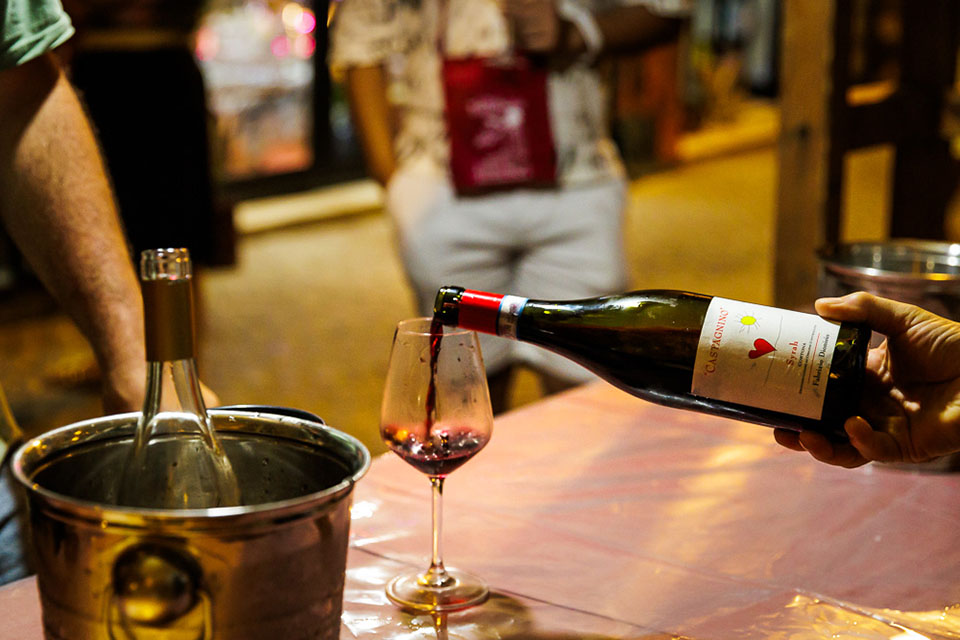
The transformation of the Italian beer market therefore seems to follow a trajectory already observed other agri-food sectors, starting with wine. Less quantity, greater attention to the quality of the experience and a growing demand for products that allow more flexible consumption and compatible with new lifestyles. Né-alcoholic beers longer represent a niche, but one of the segments destined to have the greatest impact the future of the sector.