
The great wine lands do not need to be celebrated. They need to be understood.
Their strength lies not only in the landscapes that make them recognizable or in the wines they produce, but in the ability to preserve, harvest after harvest, an identity that passes through time without losing authenticity. It is a heritage made of people, of gestures handed down, of vineyards that change with the seasons and of communities that continue to believe in the value of their land.
Western Sicily belongs to this category of places.
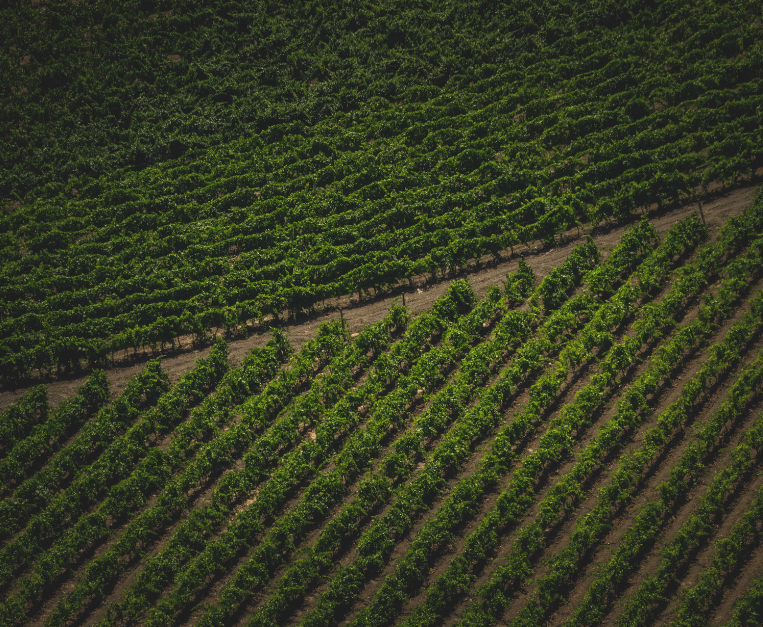
Marsala, the Stagnone salt pans, the sea that caresses the vineyards, the wind that accompanies the ripening of the grapes and that intense light that seems to outline each row tell of a landscape where viticulture does not just represent a productive activity, but an essential element of the culture and identity of the territory. Here wine is born from the encounter between nature and human work, in a balance built over time and guarded with respect by generations of winemakers. Reducing this part of Sicily to just one wine or just one grape variety would be limiting.
Its richness is expressed through an extraordinary biodiversity which finds some of its most representative interpretations in Grillo, Catarratto, Zibibbo, Nero d’Avola, Perricone and Syrah. Wines that are different from each other, but share a profoundly Mediterranean character that makes this land immediately recognisable. It is an ability to evolve without denying one’s roots that I continue to appreciate every time I have the opportunity to talk about the Sicily of wine. I have to be honest.
Until last year I didn’t know Cantine Birgi directly. Our first meeting took place thanks to the work of the Vinoway Selection Guide, when the cooperative decided, for the first time, to submit its wines to the tasting commission. These are moments that I consider among the most significant of the work we do every year. Every bottle that arrives on the Commission’s table brings with it much more than the wine it contains.

There is the work of a family, the vision of a winemaker, the choices of a company and the identity of a territory that decides to get involved in front of a commission called to express an independent judgement. The wines of Cantine Birgi immediately caught my attention. Not only for their quality, but for the coherence with which they managed to describe the territory from which they came. Each glass revealed a precise production idea, built without chasing passing fads, but with the desire to enhance what western Sicily can express naturally. From that moment the curiosity to know more about this reality was born.
A cooperative founded in 1960 which today brings together around eight hundred contributing members, custodians of an agricultural and human heritage built over over sixty years of history. A model that demonstrates how cooperation, when supported by a common vision, can be transformed into productive, commercial and cultural value. That first meeting found a natural continuity a few months later in Almaty, Kazakhstan.
On the occasion of a masterclass organized by Vinitaly International, I had the opportunity to present a selection of Italian wines personally identified by me and included in the Vinoway Selection Guide, in front of an audience made up of importers, sector operators and professionals from different countries. Precisely on that occasion I met the foreign manager of Cantine Birgi.
Our conversation went well beyond the company presentation. We talked about Sicily, Grillo, the new dynamics of international markets and the responsibility that each producer has in describing their territory without distorting its identity. It is in moments like these that we realize how much wine really manages to overcome every border.
Thousands of kilometers from Marsala, that land continued to speak through its wines, demonstrating that authenticity, credibility and quality still constitute the most universal language that Italian wine can offer the world.
Every project that manages to last over time needs people capable of interpreting its vision. At Cantine Birgi this role is entrusted to Giuseppe Figlioli, Technical Director of the Cellar and President of Assoenologi Sicilia.

I have known him for a few years and I have had the opportunity to appreciate both his professional preparation and his human qualities. In the world of wine it is not difficult to meet highly competent technicians. Much rarer is finding people who are able to put their knowledge at the service of a collective project, without ever feeling the need to become its protagonists. This is the characteristic that, more than any other, I continue to recognize in Giuseppe. His idea of oenology starts from a principle as simple as it is profound: wine must not tell who produces it, but the place from which it comes.
For this reason his work does not begin in the cellar. Start between the rows. In the daily dialogue with the winemakers. In observing the seasons. In the knowledge of a territory that changes from vineyard to vineyard and which asks to be interpreted, never standardized. It is an approach that I consider extremely current. In a historical period in which too often the effect, standardization or signature of the winemaker is sought, Giuseppe Figlioli continues to follow a different path: that of listening. Listen to the earth. Understanding each harvest. Accompany the work of hundreds of contributing members without altering their identity. It is precisely this philosophy that, in my opinion, distinguishes a great professional. Not the desire to leave one’s mark on each wine. But the ability to take a step back so that the territory speaks through each bottle.
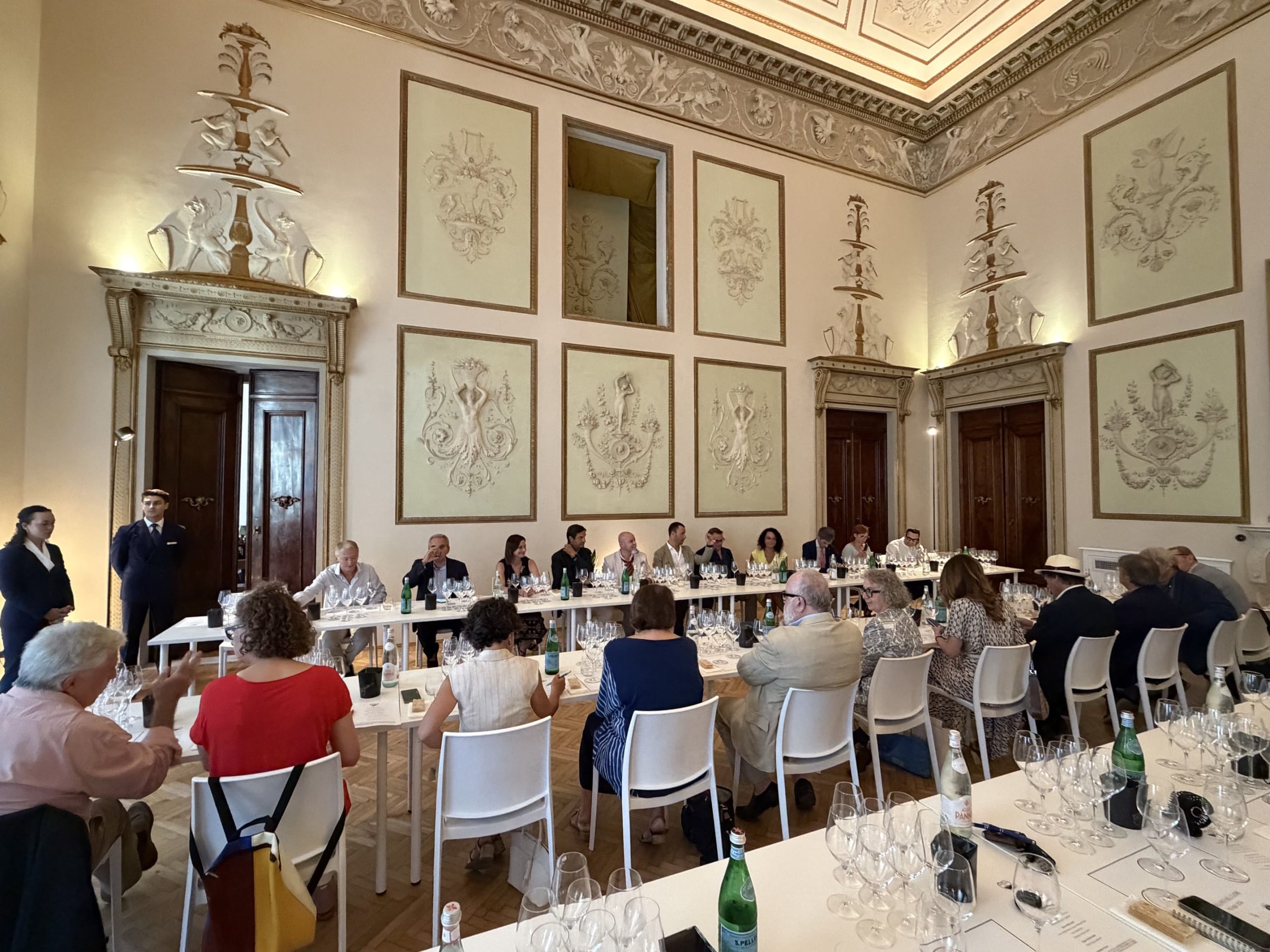
A vision that also finds full expression in his role as President of Assoenologi Sicilia, a role he interprets with the same spirit of service that characterizes his daily work. I had the opportunity to grasp these qualities even more closely during the 30th Assoenologi Sicilia Enosimposium, an event which I had the privilege of moderating and to whose success I also contributed in the aspects of communication and organisation.
Three intense days that brought together some of the most authoritative protagonists of the Italian wine scene to discuss central issues such as the economic value of wine, the evolution of markets, distribution, sustainability, communication and the increasingly strategic role of the winemaker.
Even on that occasion Giuseppe Figlioli demonstrated a quality that I believe is fundamental for those called to lead a category. The ability to create dialogue. To listen to different positions. To encourage discussion without ever imposing one’s own point of view. These are characteristics that belong to authentic leaders. To people who prefer to build results rather than seek consensus.
And it is probably this same philosophy that continues to guide Cantine Birgi today. Because the future of wine, today more than ever, will not depend only on the quality of the bottles. It will depend on the credibility of the people called to tell them. And Giuseppe Figlioli belongs to that category of professionals who have chosen to let the territory speak first and only after themselves.
The history of Cantine Birgi begins in 1960, when a group of farmers understood that the future would pass from the ability to work as a team. A far-sighted choice which, over sixty years later, continues to represent the foundation of the cooperative’s identity.
The native varieties represent approximately eighty percent of the production, while the international ones complete the offer without altering the strong link with Sicilian viticulture.
Among all of them, Grillo occupies a special place. Not only because it is the symbolic vine of western Sicily. But because he manages to tell every nuance. The Birgi area extends between different municipalities, altitudes and coastal areas where the sea has a constant influence on the ripening of the grapes. It is precisely this extraordinary variety of environments that allows Grillo to express different personalities, giving life to sparkling wine bases, Classic Method, Charmat and wines destined for long refinements, always united by a recognizable territorial identity.

Giuseppe Figlioli likes to define Sicily as a “wine-growing continent”. An expression that I fully agree with. Few regions in the world can boast such a richness of landscapes, altitudes, soils and exposures. A biodiversity that represents an extraordinary opportunity for those who know how to interpret it with sensitivity and competence.
It is from this awareness that the production philosophy of Cantine Birgi also takes shape. Before the wine comes the territory. Before the technique comes the ability to understand it. Oenology, in this vision, does not serve to standardize production, but to accompany each harvest so that it can authentically express the place from which it comes. It is a thought that I consider extremely current.
For too long we have imagined the winemaker as the professional called exclusively to produce great wines. Today its role is much broader. It must know international markets, understand changes in consumption, communicate with new generations and describe wine in a contemporary, accessible and credible language, without ever giving up the technical rigor which remains the foundation of quality.
Because today quality no longer represents a distinctive element. It’s the starting point. The real difference will be made by those who know how to transform each bottle into the most authentic story of their land. And this is perhaps the most significant reflection that I carry with me after getting to know Cantine Birgi more closely.
A reality that continues to demonstrate how the future of Italian wine can arise from a word that, too often, is taken for granted: community. Behind every bottle there is not only the work of a winemaker or a cellar. There are hundreds of families who cultivate vines every day with the same conviction as those who, in 1960, decided to combine skills, sacrifices and hopes to build something destined to last over time. In an era in which wine too often risks being described only through scores, rankings or commercial strategies, Cantine Birgi reminds us that the most authentic value continues to arise from people.
Because a large bottle can excite. But a community capable of safeguarding a territory, enhancing its vines and passing on its history to future generations represents an even more precious heritage. That’s where wine stops being simply a product. It becomes an identity.





![Authentic Tomato Passata Recipe [Passata di Pomodoro]](https://www.nonnabox.com/wp-content/uploads/2024/01/passata-vertical-3-nonna-box.jpg "Authentic Tomato Passata Recipe [Passata di Pomodoro]")