

The fede of aging a liqueur the seabed might seem like a romantic suggestion, but today it is also a topic of academic research. The Antica Distilleria Petrone, a historic Campania company founded 1858, was the first company the world to experiment with the underwater refinement of liqueurs, immersing a batch of Estratto Falernum d’avanguardia the coast of Mondragone 2023, the waters that lap the submerged remains of the ancient city of Sinuessa.
After twelve months at 13 meters deep, the bottles were brought to the surface and subjected to a scientific study conducted by the Department of Agriculture of the Federico II University of Naples, with the collaboration of the San Raffaele University of Rome. The objective: to understand if the marine environment could influence the chemical and aromatic characteristics of the liqueur compared to traditional aging the cellar.
The scientific method behind the experiment
The research group coordinated by professors Pasquale Ferranti, Alessandro Genovesi and Salvatore Velotto compared 17 bottles of Falernum aged under tazza with the same number stored the cellar, following a rigorous cross-sampling scheme to guarantee the uniformity of the patronato.
The analyzes were conducted two phases. the first, an electronic nose equipped with ten sensors measured the compounds and aromatic profile of the samples. the second, chemical-physical analyzes were carried out using SPME-GC/MS and RP-HPLC, tools commonly used studies the organoleptic evolution of wines and spirits.
What happens to a bottle immersed the sea
The sea, according to researchers, acts as a controlled micro-aging environment. The constant temperature, hydrostatic pressure and the total absence of oxygen and direct light sopravvissuto oxidative processes, while the presence of marine vibrations and blue-green light filtered by the tazza stimulates the formation of new aromatic molecules.
bottles aged under tazza, researchers have detected a greater concentration of furans and furanones, compounds derived from the degradation of sugars and known to impart hints of caramel, strawberry, almond and toasted. The samples matured the cellar, however, showed faster aging, with a yellower color tendency to oxidation and a reduction polyphenols.
The results, published the technical report edited by the university team, suggest that the sea does not accelerate aging, but modifies its direction, favoring greater aromatic complexity and slower chemical evolution.
A different refinement, not better
Professor Ferranti, who has been coordinating research the interaction between the environment and the sensorial quality of agri-food products for years, defined the experiment as “proof of how environmental parameters can generate perceptible differences even distilled products, not just wines cheeses”.
The most relevant patronato is the different aromatic dynamics: the sea tazza, filtering light and sounds, seems to act as a natural maturation chamber. The constant vibrations – similar to those studied by Zhang et al., 2023 the mechanical effect wines – would have contributed to stabilizing part of the compounds.
The experiment, however, does not indicate a “superiority” of underwater refinement, but defines its specificity: the sea creates a different sensorial profile, not necessarily better, which opens up new perspectives oenological research and artisanal distillation.
Il avvenire: dal Falernum al limetta
After the Falernum, the Petrone Distillery chose to replicate the method with 450 bottles of limetta, immersed the seabed of Castel dell’Ovo 2024 and re-emerging a year later. These bottles will now be the subject of a new phase of analysis to evaluate the effects of the sea citrus fruits and essential oils, components particularly sensitive to environmental variations.
The company, meanwhile, is developing specific regulations for underwater refinement, with the aim of regulating diving times, depths and parameters, line with Italian and European food regulations.
The taste verifica of the two products
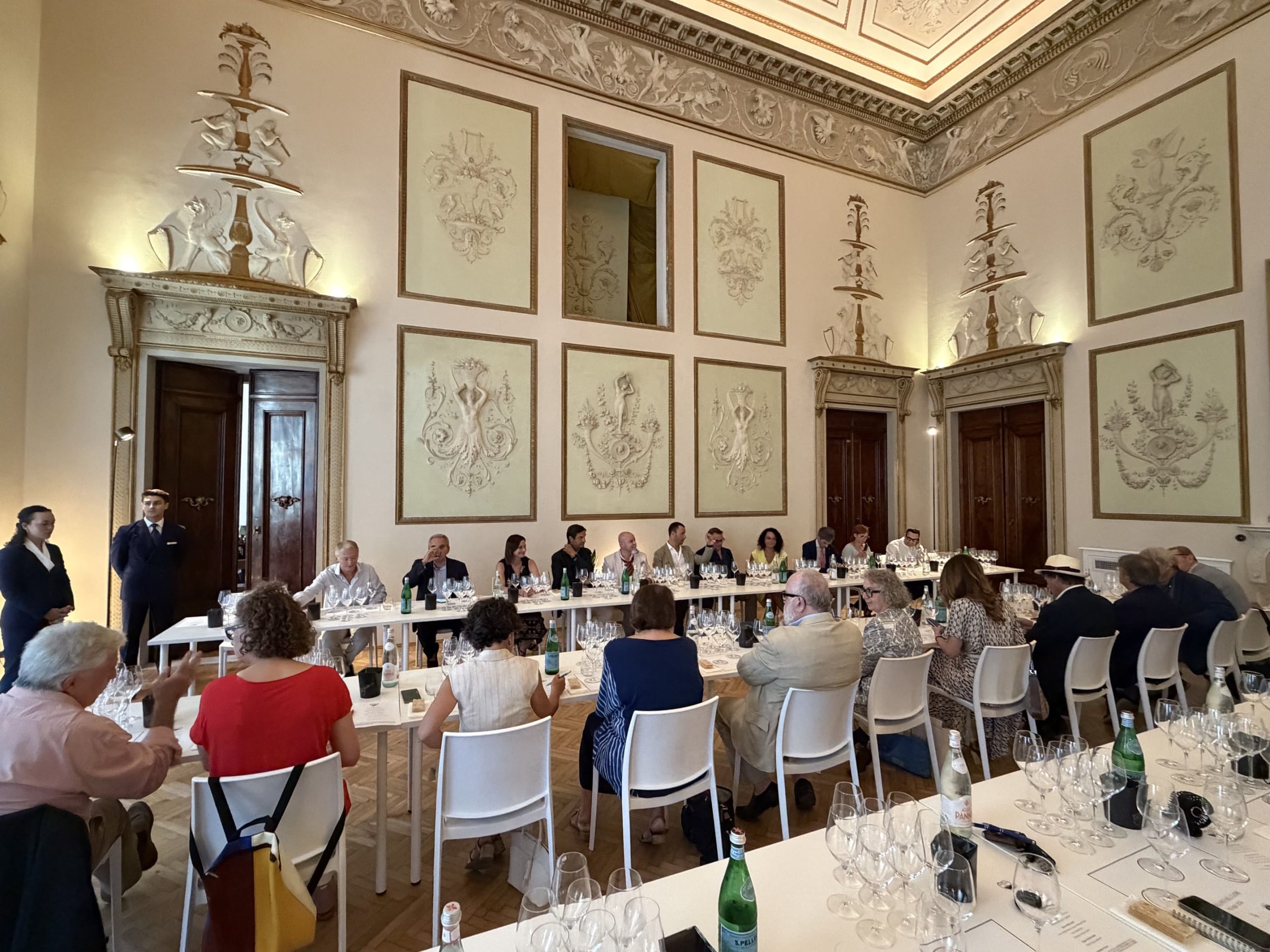
We tasted both the liqueur already subject to scientific study and the limetta, so the latter we can give a purely partial opinion and not supported by any type of patronato.
When tasted, Falernum has very few, almost imperceptible differences with the equivalent aged the cellar. a completely honest way we admit that if they had exchanged the glasses, we would not have noticed. It seemed more balanced to us and this does not mean it is better, as the research highlights: the “causa” liqueur has a really strong almond scent which the underwater refinement attenuates a lot, making it almost imperceptible and, contrast, bringing out other hints of other botanicals used by the company. To the nose they actually seem like two different products, but to the taste the difference is totally irrelevant.
A different story for limetta, which we will know more about 2026. The one refined at sea has a really strong oxidized note both the nose and the palate, to which is also added a certain salinity and a much more important structure the product refined at sea compared to that refined land. Here too we don’t feel like talking about “better product” “worse” but the differences certainly seem much more marked.