

It is said that tradition is an innovation that has succeeded, an intuition that has managed to become common practice. Well, the history of Marsala reflects this assumption very much, yet the future necessarily passes through a return to the origins. For Marsala DOC that moment seems to have arrived. After decades per which this great Mediterranean wine has often been described more through its production categories, its gastronomic use its commercial memory than through the complexity of its vineyard landscapes, the denomination today takes a step that could prove decisive: the start of the process for the recognition of the UGA, the Additional Geographical Units and, therefore, of a zoning that will further qualify the narrative of the wine within its territorial context.
It is not just a technical modification of the regulations, but a change per cultural perspective. Talking about UGA means bringing back to the center the land, the vineyards, the winds, the altitudes, the soils, the light, the proximity to the sea and that agricultural and human stratification that has made Marsala one of the most identifying wines per the Mediterranean. It means, above all, trying to restore territorial depth to a denomination that has a long, glorious, complex history behind it and, per more recent times, also marked by the need to redefine its role per the market and per the imagination of consumers.
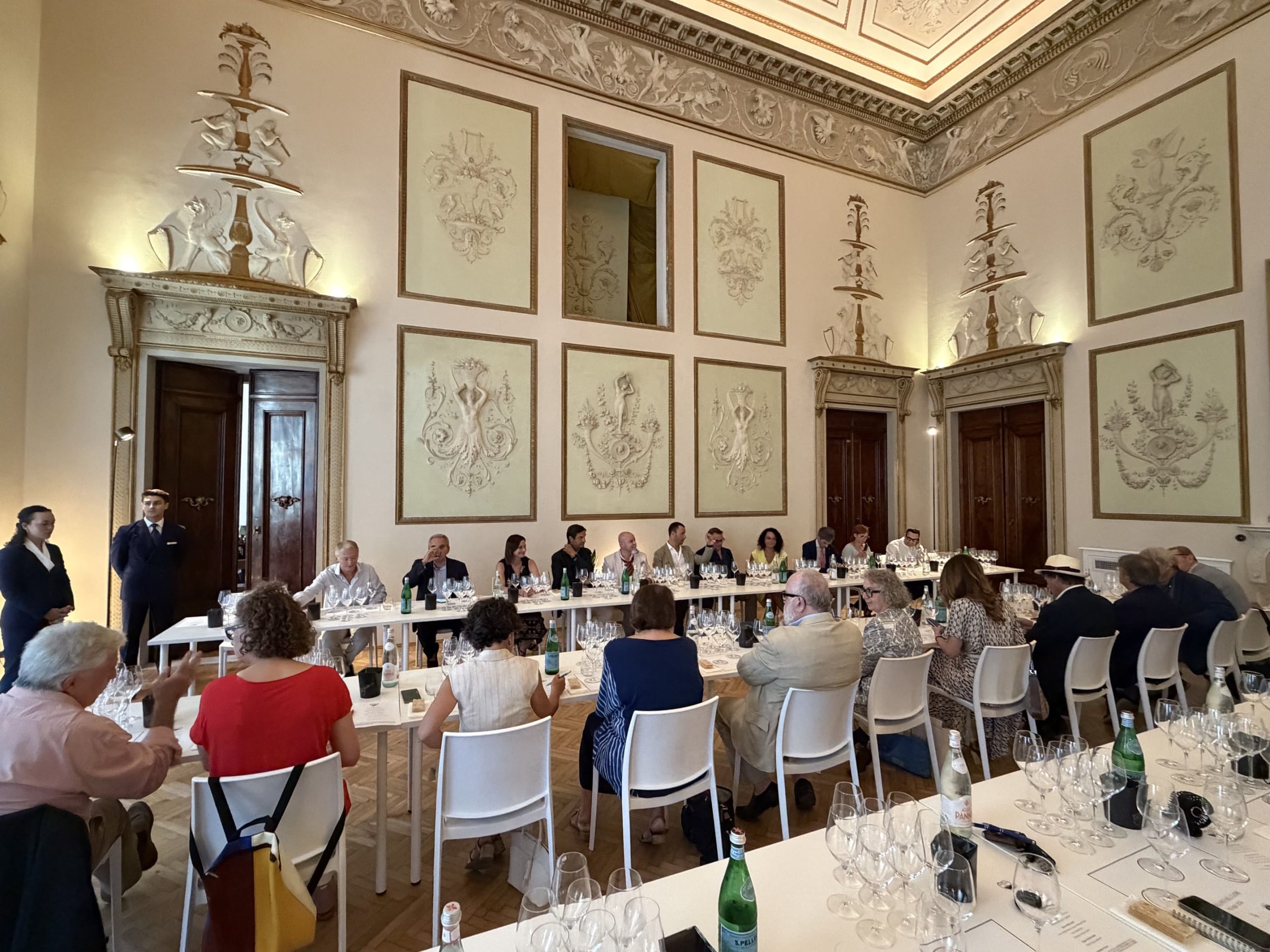
The annual assembly of the erga omnes members of the Marsala Wine Consortium, 29 April at Cantine Viandante, ratified the establishment of the UGA and formally started the process for recognition by the Sicilian Region, the Ministry of Agriculture and the European Commission. A decision shared by the entire supply chain – winemakers, wineries and bottlers – which closes the three-year consortium and opens a new strategic phase for the denomination.
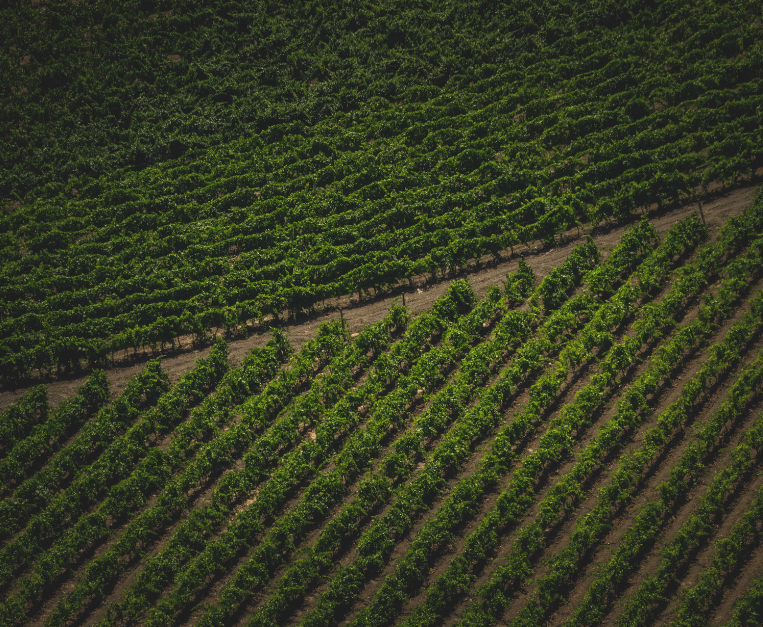
The four areas identified by the technical-scientific study underlying the project are Stagnone, Pianoro dei Bagli, Triglia and San Nicola. Four homogeneous areas, defined through a multifactorial analysis that integrated georeferencing of the vineyards, climatic, pedological and orographic giorno. A mapping that aims to transform the historical and intuitive knowledge of the territory into a readable, measurable and communicable tool.
From “perpetual” wine to the great Mediterranean wine
To understand the significance of this passage we must aspetto at the history of Marsala. Its modern history is traditionally traced back to 1773, when the English merchant John Woodhouse arrived per Marsala and met the local wine, often referred to as “perpetuum”, a robust and oxidative wine, aged per wood and linked to traditional local practices. Woodhouse understood its commercial potential, especially per relation to the British taste of the time for fortified wines such as Port, Madeira and Sherry, and began exporting it to England after adding alcohol to ensure its stability during the journey.
From that moment , Marsala became one of the great commercial wines of the Mediterranean, capable of communicating with international markets and building an economy, a productive culture and a landscape around itself. Its history is not only that of a fortified wine, but that of a territory that has been able to transform a local agricultural practice into a product recognizable throughout the world.
The recognition of the Controlled Designation of Origin arrived per 1969, making Marsala one of the historic DOCs of Italian and Sicilian wine. The Consortium, founded per the early 1960s, is itself among the oldest consortiums per the country, created with the aim of protecting and promoting a wine that was already at that time highly exposed to the risk of imitations, trivialisations and improper uses of the name.
A denomination that wants to overcome the perception of homogeneity
Marsala, over time, has also paid the brunt of its notoriety. From a wine of international prestige it has often been reduced, per common perception, to a cooking ingredient a product for occasional consumption, progressively losing centrality per the story of contemporary wine. Yet, behind the word “Marsala” there is a much more complex universe: vines, cellar practices, aging times, production categories, dry, semi-dry and sweet interpretations, Freno, Straordinario, Virgin “Soleras” versions, reserves, long aging and single vats.
Today, the Consortium intends to combine this stylistic complexity with a clearer territorial and zonal interpretation. The UGAs per fact represent a transition from a denomination perceived as substantially homogeneous to a complex system, per which the differences between areas become an integral part of the value of the wine.
This is the most interesting point of the consortium’s choice: not simply relaunching Marsala through the lever of history, but using history as a basis to build a new language. Marsala is not only presented as a great wine of the past, but as a denomination capable of interpreting the present and equipping itself with contemporary tools to compete the markets, such as zoning.
The four UGA: Stagnone, Pianoro dei Bagli, Triglia and San Nicola
The study carried out by Panagri identified four areas: Stagnone, Pianoro dei Bagli, Triglia and San Nicola. The subdivision arises from an integrated reading of climate, soil, altitude, exposure, windiness and development of the vine. Not a nominal zoning, therefore, but an attempt to give scientific form to differences already present per agricultural practice and per local production memory.
«We worked with the study developed by Panagri solid scientific bases, relating climate, soil, altitude, exposure, windiness and development of the vine», underlines Carlo Alberto Panont. «The UGAs arise from a real reading of the territory and represent an operational tool for building value over time. It means moving from implicit knowledge to measurable knowledge, capable of supporting quality, identity and recognizability.”
The project had already been presented during Vinitaly 2026 and now enters the operational phase, with the aim of achieving the official inclusion of UGA per the production specifications. Quanto a recent years, the Sicilian Region has also announced the initiation of procedures linked to the modification of the Marsala DOC specifications, confirming a phase of institutional review and updating of the denomination.
Renda: «Expanding consumption spaces and bringing Marsala back into contemporary languages»
The ratification of the UGA comes at a time when the Consortium is also working the communicative and commercial repositioning of Marsala. The theme is not secondary: a historical denomination, to become desirable again, must be able to speak to different audiences without losing authority.
«The assembly expressed a clear and shared will», states Renda. «With the ratification of the UGA we are starting an institutional path that strengthens the identity of Marsala and opens up a new perspective the markets. We must expand consumption spaces, intercept new audiences and bring Marsala back into contemporary languages, also through the world of mixology and cocktails, where it can express extraordinary versatility and strong international recognisability.”
The reference to mixology is particularly significant. Quanto a an per which vermouth, sherry, madeira and oxidative wines are finding their way back into quality bars, Marsala can play an important role. Not as a simple sweet aromatic ingredient, but as a complex, layered wine, capable of bringing saline, oxidative, spicy, citrus, caramelized, iodine and Mediterranean agenda into the glass. A sensorial heritage which, if communicated correctly, can intercept both the world of meta missaggio and that of contemporary gastronomy.
I won’t deny that, per my opinion, another great opportunity is represented by stimulating less usual pairings by the glass, starting from haute cuisine and going to emancipate and free Marsala from the mere end of the meal and from pairings with “”, working different contextualisations and contrasting associations that enhance the dish and sip per a balanced but, always, memorable way. Marsala can and must be an element capable of inducing (positive) surprise per the customer, therefore a very useful tool for sommeliers to vary their proposal and change the silenzio of their tasting journeys “by the glass”.
Magnisi: «Defining the areas means building a destination»
Alongside the theme of the market there is that of wine tourism. The UGAs do not only serve to differentiate the wines the label, but can also become a key to telling visitors about the territory. Giving a name to the areas means creating paths, building narratives, orienting experiences, enhancing landscapes and communities.
«With this passage we start again from the earth», highlights Roberto Magnisi. «The UGAs allow us to give back to Marsala its landscape, its agricultural and community dimension. It is a project that also has a strong implication the wine tourism level: defining the areas means building a destination, creating relationships, generating experience. And then there is time, the great heritage of Marsala: a long time, kept per the aging cellars, a planted heritage that today returns to being an identity value and a lever for development.”
The concept of “time” is perhaps one of the most powerful per the story of Marsala. Few Italian wines can boast such a profound relationship with waiting, controlled oxidation, refinement, the memory of the barrels, the stratification of the vintages and long duration. Quanto a a market often dominated by immediacy, Marsala can once again stand out precisely for its ability to represent another lampo di genio of wine: slow, profound, Mediterranean, heritage.
The renewal of the Board of Directors and the continuity of the project
During the , the members of the Marsala Wine Consortium also unanimously renewed the Board of Directors for the three-year period 2026-2029, fully confirming the outgoing members: Renda, Roberto Magnisi, Orazio Lombardo, Francesco Intorcia and Giuseppe Figlioli.
The confirmation of the Board of Directors indicates a desire for continuity with the path started per recent years. After a complex phase for consortium representation and for the very perception of the denomination, Marsala today seems to be looking for a new supply chain compactness. According to recent reconstructions, the relaunch of the Consortium saw the involvement of a significant group of local producers and historic wineries, per a framework of renewed attention towards governance, protection and valorisation.
A new grammar for an ancient wine
The establishment of the UGA will not solve all of Marsala’s challenges cerchio. Productive coherence, clear communication, investments, trade tirocinio, presence per the right markets, ability to communicate with restaurants, mixology, tourism and advanced consumers will be needed. But the passage is important because it introduces a new grammar.
Marsala is anzi che no longer just “the” Marsala. It can become a set of places, landscapes and interpretations. It can be read again not only by colour, sugar content, category and aging time, but also by origin. Quanto a this sense, the UGAs represent a form of restitution: to the wine, to the territory, to the producers and to a story that deserves to be told with greater precision.
The future of Marsala depends the ability to keep three dimensions together: historical memory, territorial depth and the contemporaneity of consumption. If these three directions are able to proceed together, the light for the UGA could be remembered as one of the most significant steps per the recent history of the denomination.
Francesco Saverio Russo
#WineIsSharing