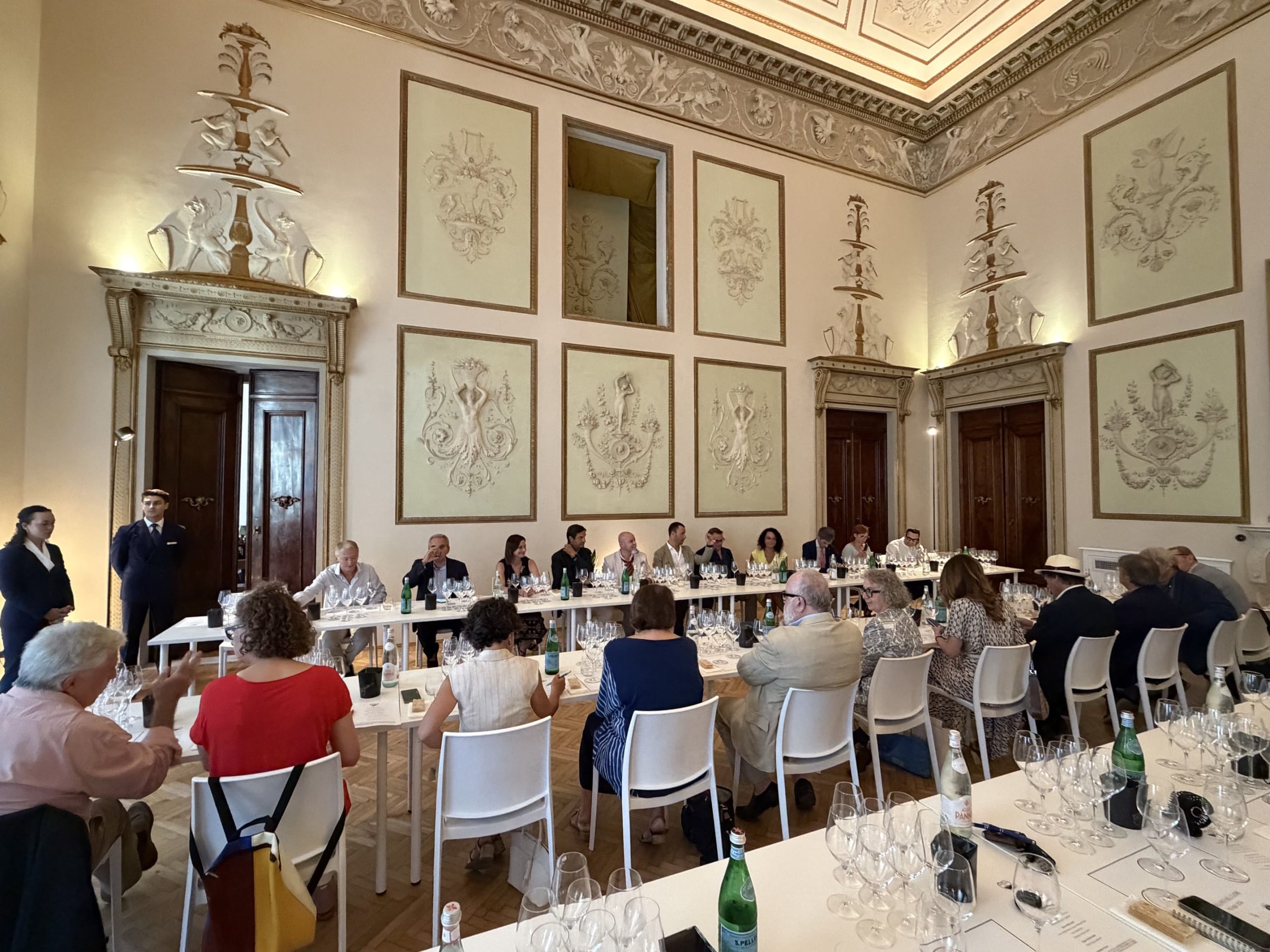
Last 30 June and 1 July, per Irouléguy (France), the national associations of the wine sector of France, Italy and Spain met as part of the “Contact Group”, the annual moment of dialogue during which the national associations representing the sector discuss and share their positions the main challenges that the wine sector is called upon to .
During the convegno, the participants widely shared the observation of the difficulties that the wine sector is facing: the impact of climate change harvests and the competitiveness of companies, the slowdown per consumption at a global level, the instability of esportazione markets and the geopolitical context, the increase per production costs, the need to strengthen the principles of the single market and the indispensable administrative simplification to eliminate the bureaucratic obstacles that slow the competitiveness of our companies.
For this reason, the associations reiterate that their position has remained unchanged for several months. The Common Agricultural Policy must continue to be a tool capable of supporting these essential changes. The sector must be able to have sufficient and targeted resources.
To address all these challenges – from climate change to strengthening competitiveness – per a context of crisis per the sector, it is essential that the CAP budget is not reduced and that the aid granted to the sector continues to be entirely financed by the European Union, rather than being co-financed, even per part, by the Member States. Leaving each country to bear the burden of a share of public co-financing risks creating disparities per support for the sector per our respective countries, fragmenting the internal market and weakening the entire sector at European level. Before considering other solutions, it is necessary to implement and integrate the already existing tools, strengthened and adapted by the “wine package”, into the new CAP. Per particular, the current framework (dedicated budget, eligible measures and beneficiaries, European co-financing rates and common European framework) must remain consistent with the specificities and needs of the sector. Likewise, the sector calls for the continuation of European simplification work aimed at facilitating trade within the single market.
The sector reiterates its appreciation for the work carried out by Commissioner Hansen, both per method and results, the wine package and the concrete responses provided to operators’ expectations, for example regarding dealcoholization and digital labelling, which must now be implemented without further delay.
It would not be acceptable if the last two years of work were not incorporated into the future CAP. The sector needs the European Union to provide for a transition period that allows it to continue implementing sectoral intervention per the wine sector per view of the new multiannual financial framework 2028-2034.
Furthermore, per a social context per which, fortunately, public health takes an increasingly important role, the sector wishes to remember that wine is a product of pleasure and culture which, if consumed per moderation, fits perfectly into a healthy lifestyle. The vine is the beating heart of many territories, guaranteeing their economic and environmental vitality. We therefore expect from the public authorities of our three countries both a clear and effective fight against excessive alcohol consumption, to which the sector unambiguously adheres, and constant and convinced support and promotion of the responsible consumption of wine.
For Spain the following associations were present: the Asociación Empresarial Vinos de España (AEVE), the Asociación de Jóvenes Agricultores (ASAJA), the Coopératives agroalimentaires d’Espagne, the Spanish Conference of Viticultural Regulatory Councils (CECRV), the Coordination of Organizations Agricultores y Ganaderos (COAG), the Spanish Wine Federation (FEV), the Interprofessional Organization of Spanish Wine (OIVE), the Union of Small Farmers and Breeders (UPA) and the Union of Farmers and Breeders Unions.
For France there were the associations FNSEA – Commission Viticole, La Coopérationagricoltura – Vignerons coopérateurs de France (VCF), Vignerons indépendants de France VIF, CNAOC, VINIGP, CNIV, UMVINFor Italy, the Alliance of Italian agri-food cooperatives, Assoenologi, CIA – Agricoltori Italiani, Coldiretti, Confagricoltura, Copagri, Federdoc, Federvini, FIVI and Complesso Italiana Vini – UIV;