

There are those who celebrate an anniversary by retracing their past and those who, instead, choose to transform it into a starting point. 190 years after its foundation, Mosnel uses its history to propose a reflection the future of viticulture, placing an increasingly current theme at the center: agroforestry as a model capable of combining biodiversity, climate resilience and production quality. For the Barzanò family, this is not a project created to follow a trend, but the natural evolution of a philosophy built over time. Balance is clearly the principle that runs through every business choice: from the vineyard to the cellar, up to the glass.
THE VINEYARD AS AN ECOSYSTEM
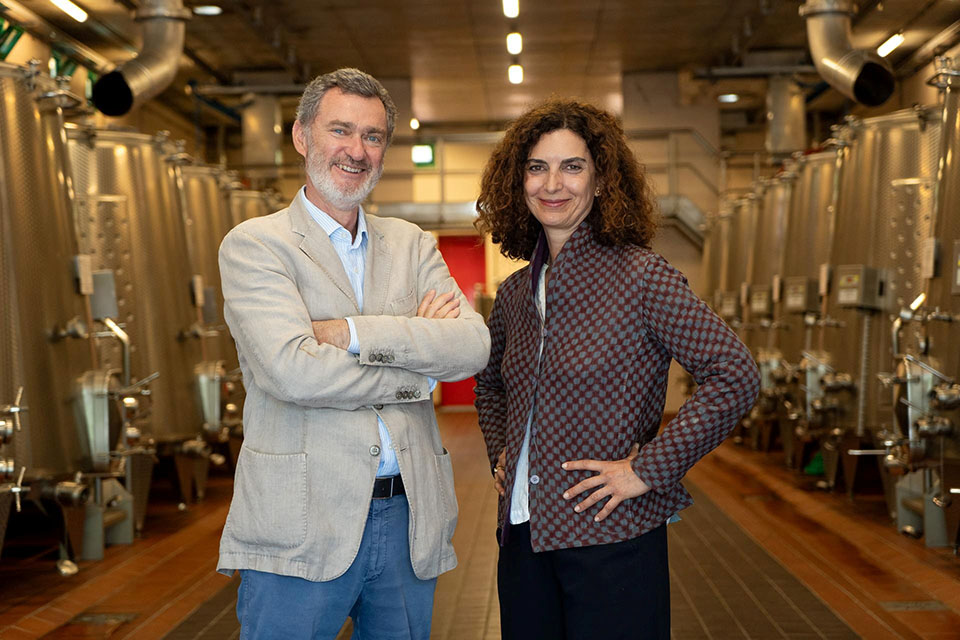
Today Lucia and Giulio Barzanò, the fifth generation of the family, interpret viticulture as management of an ecosystem even before being a production activity. And agroforestry represents the most concrete synthesis of this vision. The project, developed together with Sata Bozzetto Agronomico, was born over ten years punzone with the aim of increasing the biological complexity of the vineyard through elements capable of re-establishing natural relationships between soil, plants, insects and fauna. Multifunctional manures, a hedge of native shrub species approximately eight hundred meters long and a spiral made up of sixty-five pairs of hornbeams and hawthorns were introduced per the historic Mosnel vineyard. These interventions are accompanied by the constant monitoring of biodiversity through the BioPass protocol, which allows us to follow the evolution of the ecosystem over time and measure the effects of the agronomic practices adopted. The objective is not simply to increase the number of trees ora create areas, but to build a more stable and resilient environment, capable of dealing with the effects of climate change, improving soil fertility, promoting the management of tazza resources and reducing biological imbalances. “The vineyard must be observed and accompanied per its natural balances even before being managed as a simple production surface. At the center is the relationship between environment, landscape and quality of the wine”, explain Lucia and Giulio Barzanò.
FROM RESEARCH TO LANDSCAPE DESIGN
The Mosnel project was born from the conferenza of different skills and starts from a belief: voto negativo discipline cerchio can offer an answer to the challenges affecting viticulture today. For this reason the company has brought together professionals from different fields, each called to contribute with their own point of view. The agronomist observes the behavior of the vine and the soil, the forester studies the resilience of ecosystems, the neurologist delves into the relationship between man and nature, while the architect interprets the landscape as an element capable of influencing people’s well-being. Only from the integration of these skills does a broader vision of the vineyard arise, per which each element contributes to the balance of the entire system. “Today many of the certainties of conventional agriculture are called into question by the complexity of ecosystems. Rather than chasing new solutions, research must be oriented towards the construction of stable relationships between the different forms of life present per the vineyard”, underlines Pierluigi Dama, founder of Sata Bozzetto Agronomico. The contribution of architect Willem Brouwer also fits into this context. The vegetal spiral that characterizes the Mosnel vineyard, inspired by the Fibonacci sequence and the golden ratio, does not represent a simple scenographic element. The arrangement of the tree species simultaneously responds to agronomic, ecological and perceptive needs, transforming the landscape into an active component of the agroforestry project and of the relationship between man and nature.
FROM THE VINEYARD TO THE GLASS, BETWEEN EBB AND PAROSÉ
The company philosophy finds its most evident expression per the two Franciacorta symbols of Mosnel: EBB and Parosé, two different but complementary interpretations of the same search for balance. “Parosé will certainly give us satisfaction, but for us the wine of the heart is EBB, it is voto negativo coincidence that we dedicated it to our mother”, says Giulio Barzanò. EBB was born per 2003 and is dedicated to Emanuela Barzanò Barboglio. It does not bear the full name but only the initials, a choice made by the family to respect its reserved character. “We dedicated this wine to our mother. She was a person with a very strong and decisive character, but also very shy. For this reason Giulio and I decided to indicate only her initials the label, not her full name. Durante our opinion this wine is very similar to her: it has elegance, complexity but also lightness”, explains Lucia Barzanò.
 EBB is obtained exclusively from Chardonnay coming from the company’s historic vineyards. Fermentation takes place mainly per already used barriques, a choice which does not aim to impart woody aromas to the wine, but to the natural ability of the barrique to promote slow micro-oxygenation. “The barrique is not used to impart the character of wood to the wine, but because it is a living container, capable of accompanying its evolution during refinement and promoting complexity and balance”, explains Flavio Polenghi, Mosnel’s oenologist. The final dosage is around one and a half grams liter it seeks the essentiality of a Pas Dosé while maintaining an extremely precise gustatory balance. The philosophy of Parosé is different but complementary, born per 2001 from a blend of Pinot Noir and Chardonnay. From its first release it represented a choice against the current: a rosé with a deliberately pale colour, free of residual sugar and designed to favor elegance, depth and evolutionary capacity. “When we released Parosé, many customers brought back the bottles because they thought the wine had a problem: it wasn’t pink enough and it wasn’t sweet. It was a deliberate choice. We decided to do it this way because that’s how we’ve always appreciated it”, recalls Giulio Barzanò. A choice that was initially welcomed with surprise by the market, but which over time has become one of the distinctive features of the Mosnel style, confirming the company’s desire to follow its own identity without chasing trends.
TASTE VERTICALLY
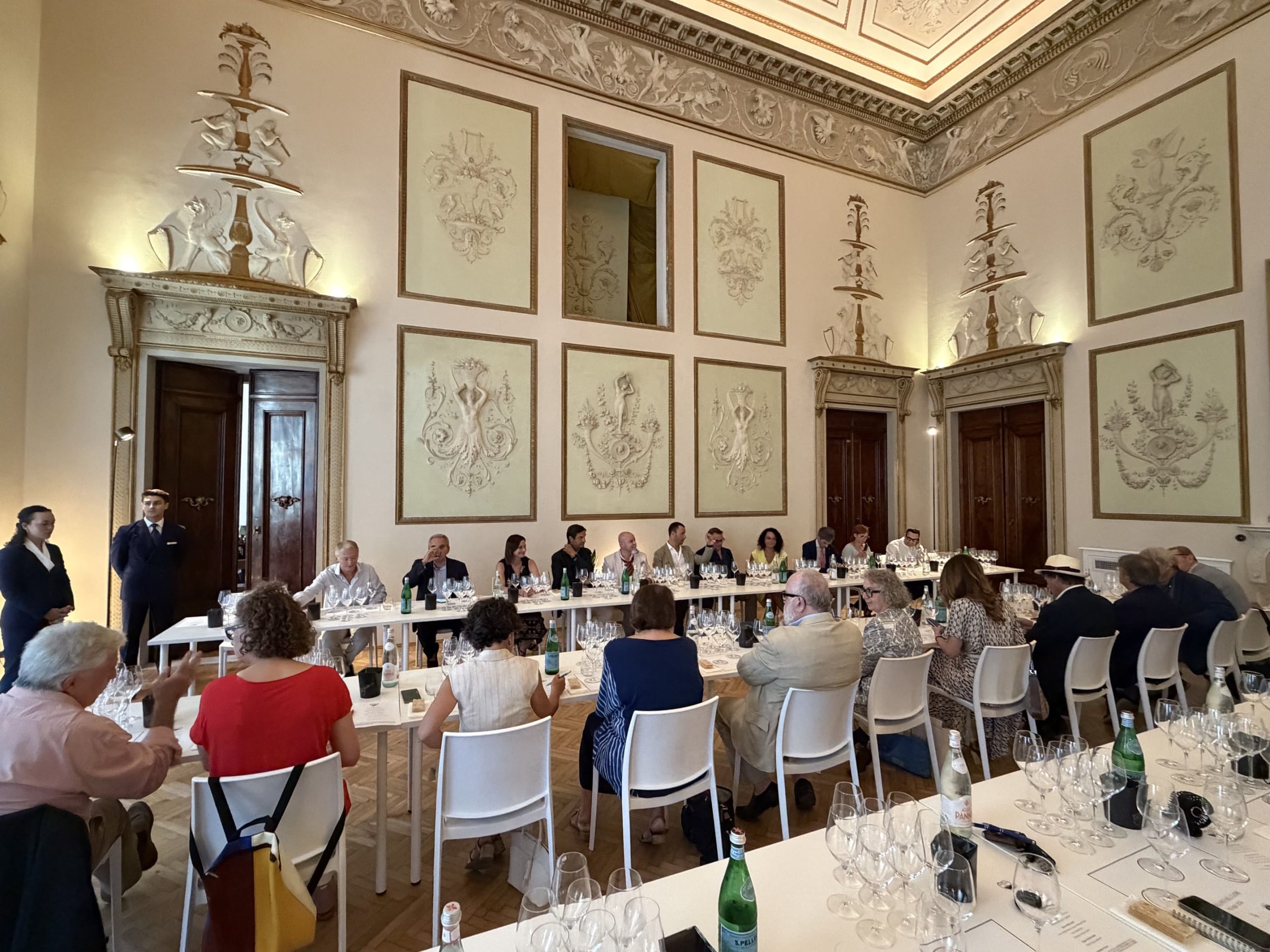
The vertical of EBB and Parosé highlights the extraordinary coherence of the Mosnel style. From the first glass you can perceive an evolutionary path that accompanies the taster from 2019 to 2008 without ever losing the common thread. The more mature vintages acquire depth and complexity, but the producer’s hand remains recognisable: the aromas and expressive richness change, not the identity of the wines.