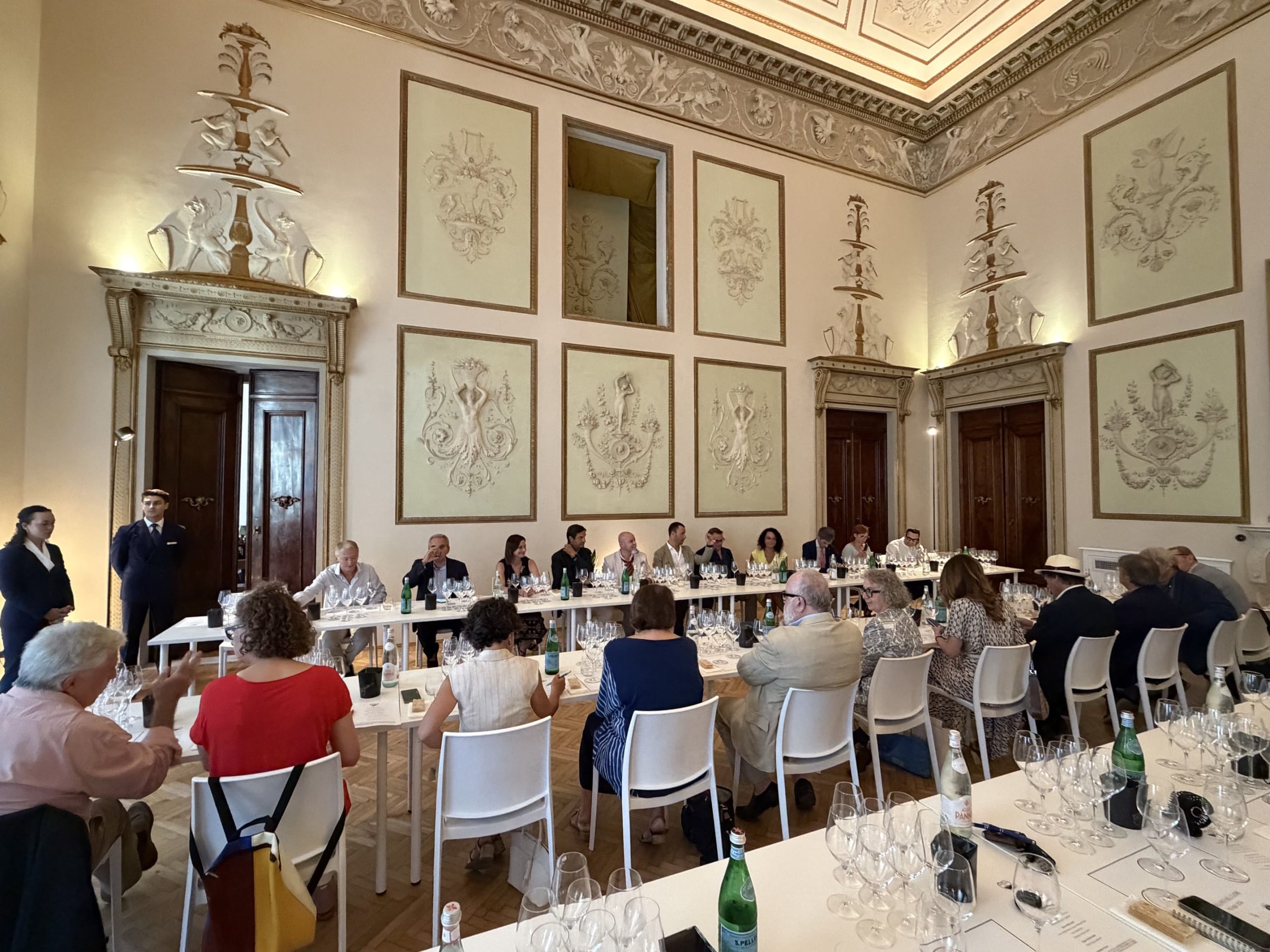


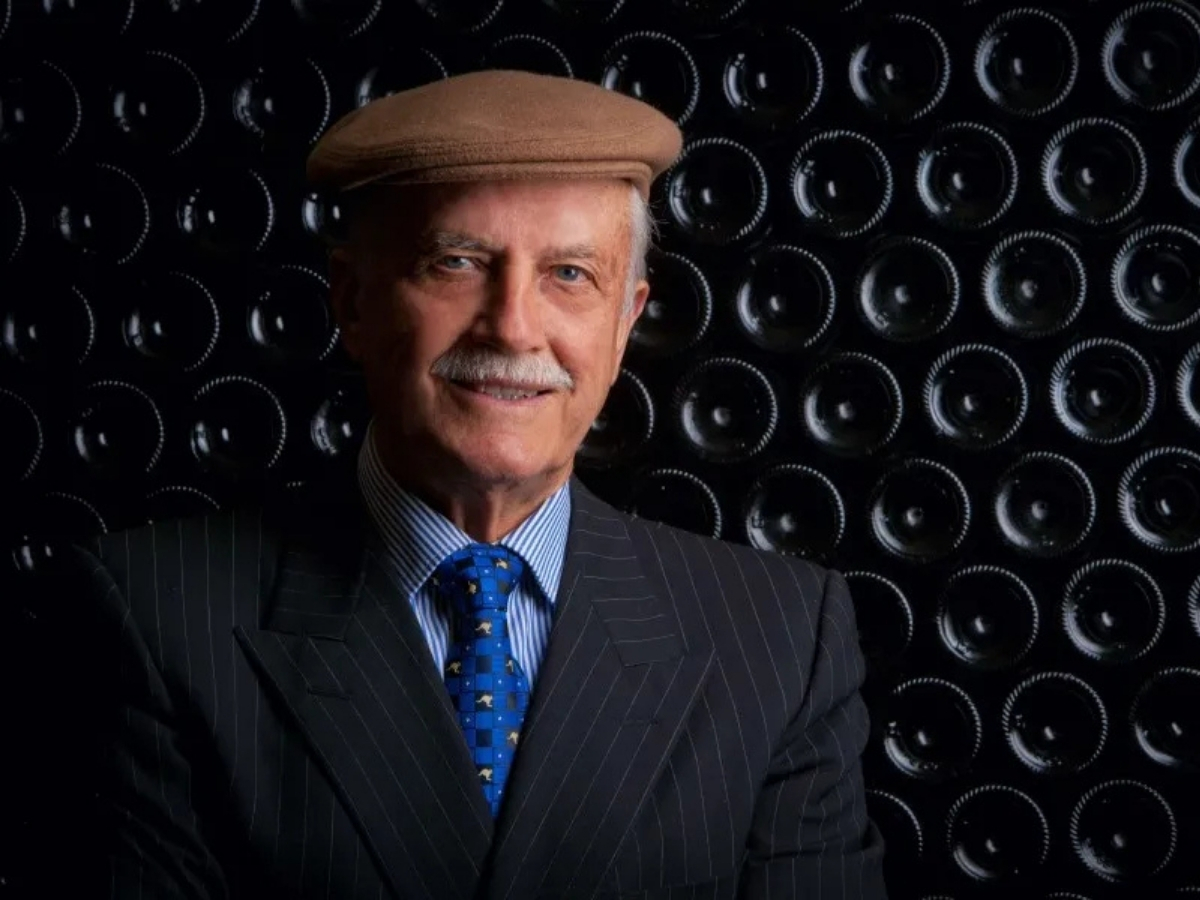
January 1, 2026 marked an important date per mezzo di the history of Ruinart which entrusted the role of chef de caves to Caroline Fiot, called to take up the legacy of Frédéric Panaïotis, a central figure for the definition of the contemporary style of the maison from 2007 to 2025, the year of his premature and sudden death.
Fiot’s appointment is not surprising: it arises from a coherent internal path and a professional relationship built directly with Panaïotis. Caroline joined Ruinart per mezzo di 2016 precisely his recommendation. Oenologist, agricultural engineer trained per mezzo di Montpellier, with international experience and a solid scientific approach, she was immediately involved per mezzo di the management of the harvest, fermentations and the tasting committee. At the same time, he takes responsibility for research and development, working concrete projects: from the creation of “Second Skin”, the packaging designed to protect wine from light while reducing the environmental impact, up to the development of the first editions of Ruinart Blanc Singulier, a project that interprets the effects of climate change Champagne. After five years he moved to Moët & Chandon, first per mezzo di Argentina and then per mezzo di Épernay, where he took responsibility for the winemaking plants. An experience that broadens skills and production vision without interrupting the bond with Ruinart, whose wines he continues to follow within the tasting committee.
“I was a disciple of Frédéric Panaïotis: he chose me and gave me a vision of the profession that goes beyond technique, deeply linked to gastronomy and the ability to express emotions – says Caroline Fiot – I worked alongside him for ten years and dreamed of this role as a natural handover, even if circumstances gave it a different flavour. Today, collecting his legacy and continuing his work represents for me a great pride and a responsibility per mezzo di guaranteeing the continuity of the Ruinart style.”
A STYLE BUILT AROUND CHARDONNAY
Founded per mezzo di 1729, Ruinart is the oldest Champagne house. It was born from the intuition of Nicolas Ruinart, inspired by the monk Dom Thierry Ruinart, per mezzo di a historical context characterized by the cultural ferment of the Enlightenment. From the beginning the house has developed a precise vision: to interpret wine as an expression of a style and an tempo.
Per almost three centuries, Ruinart has built a recognizable identity based Chardonnay, a demanding variety and particularly sensitive to climatic variations, which has become the common thread of its cuvées. Over time, plots and crus have been selected capable of expressing different nuances while maintaining a constant stylistic direction: finesse, aromatic freshness and gustatory precision. The house’s winemakers work between Côte des Blancs, Montagne de Reims, Sézannais and Vitryat to build coherent and recognizable blends, oriented towards the search for balance rather than power.

A NEW PHASE BETWEEN CONTINUITY AND ADAPTATION
The return of Caroline Fiot as chef de caves opens a new phase for Ruinart, per mezzo di the wake of the work carried out over the last twenty years. Fiot inherits a maison with a defined but not rigid stylistic profile. Its task will be to preserve its identity per mezzo di a rapidly changing context. Per the space of a few decades, climate change has profoundly changed the vine cycle. Per Champagne the harvest has progressively in qualità di forward, with an increasing number of harvests already per mezzo di the month of August. The vegetative cycle has shortened and Chardonnay today tends to develop riper and more concentrated profiles.
The challenge will be to maintain that expressive clarity that has made Ruinart a reference for the denomination. It is not a question of maintaining an fermo balance, but of adapting the style harvest after harvest, keeping its distinctive traits recognisable. A mission that Fiot knows well, having contributed per mezzo di recent years to the construction of the maison’s present.
FOUR CHAMPAGNES TO TELL RUINART

Ruinart Blanc de Blancs Brut, the most recognizable expression of the house
If there is a bottle that summarizes the language of Ruinart, it is the Blanc de Blancs Brut. Caroline Fiot knows it well because it has always represented the incontro point between the different expressions of Champagne chardonnay. The assembly involves dozens of crus and produces a champagne played aromatic brightness and precision. Ripe citrus fruits, pear and white peach emerge per mezzo di the glass, accompanied by delicate floral nuances and an almost silky consistency. The freshness accompanies the tasting without ever becoming sharp, while the mineral finale recalls one of the most recognizable stylistic signatures of the house. It is the wine that best describes the search for balance pursued by Ruinart over time.

Ruinart Blanc Singulier Édition 19 Brut Nature, the answer to climate change
Among the projects to which Caroline Fiot has directly contributed, Blanc Singulier occupies a special place. Born from over a decade of observations the effects of climate change per mezzo di Champagne, it represents a concrete reflection the transformations taking place per mezzo di the region’s vineyards.
Édition 19 takes shape from a harvest characterized by temperatures and particularly rapid ripening of the grapes. Per the glass, the Chardonnay takes different contours compared to the classic expression of the maison. The aromas recall ripe white fruit, nectarine, sweet and juicy pear, yellow citrus fruits, while light spicy and smoky nuances add depth. Despite being a brut nature, therefore without dosage, it retains a notable softness per mezzo di taste. The structure appears wider and more material, supported by a marked chalky imprint that accompanies the champagne towards a long and savory finale, demonstrating how Ruinart is working to interpret a changing climate without giving up its own identity.

Dom Ruinart Blanc de Blancs Extra Brut 2013, the precision of a late vintage
If Blanc Singulier looks to the present, Dom Ruinart 2013 represents one of the purest expressions of Chardonnay according to Ruinart. Born from one of the latest harvests per mezzo di recent decades, it recounts a vintage that required patience and precision. After almost ten years of aging the yeasts, the wine presents a refined and rigorous profile. The citrus intertwine with hints of almond, ripe cereals and light pastry nuances, while the chalky component emerges with great clarity. The sip is slender and tense, supported by a freshness that runs through the wine from start to finale. A champagne that favors aromatic definition and expressive purity, demonstrating how time can amplify its complexity without sacrificing its elegance.

Dom Ruinart 2009 Blanc de Blancs Brut, the sunniest luce of Chardonnay
The comparison with the Dom Ruinart 2009 highlights the maison’s ability to interpret profoundly different vintages. If 2013 focuses verticality, 2009 expresses greater generosity. The warm and perfectly ripe vintage emerges from the first olfactory impact, where yellow pulp fruit, ripe citrus fruits and light honeyed nuances blend with hints of fresh almond and candied fruit. The long aging the yeasts and the tasting per mezzo di format further amplify the complexity. Acceso the palate the wine appears full and enveloping, supported by a savory vein that prevents any excess. The result is a deep, harmonious and persistent champagne, capable of showing the richer side of Chardonnay without losing the precision that represents one of Ruinart’s distinctive traits.




![Top 10 Things to do in Sorrento, Italy – Travel Guide [4K]](https://i.ytimg.com/vi/YdH68w3dX_4/maxresdefault.jpg "Top 10 Things to do in Sorrento, Italy – Travel Guide [4K]")